
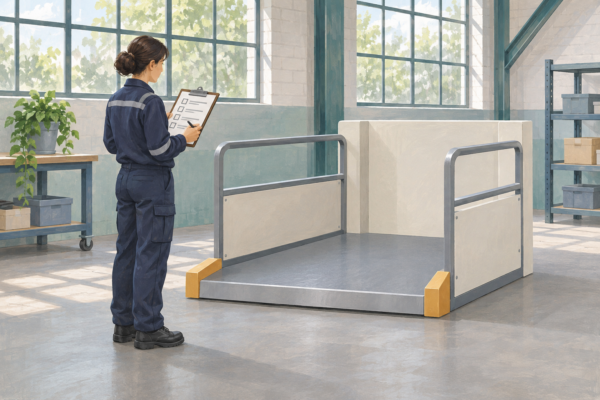
Platform Lift Factory Acceptance Checks
Before a bespoke platform lift leaves the factory, agree what to witness, record assembly and function checks, and assign any checks that depend on installation.
Hard anodising at 25 microns provides significantly better durability than standard AA25 anodising, particularly for sliding and telescopic lift components.
Engineering-grade hard anodising can deliver up to 40% greater abrasion resistance compared to AA25 and reduce long-term maintenance needs by approximately 30%.
Lift systems with internal aluminium sleeves, such as the Wellington Lift and Knightsbridge Stair Lift, benefit greatly from the harder, colder-process oxide layer.
Clear communication with surface-treatment suppliers is essential when planning project timelines or integrating anodised parts into assemblies.
For deeper engineering context, see Finishing, BOM Integration & Surface Treatment Communication and Access Lift Floor Finishes Guide.
Hard anodising plays a critical role in the long-term durability and performance of aluminium components used within hidden platform lifts. These components often slide, rotate, or telescope within each other, meaning the oxide layer must withstand continuous friction. Many Sesame Access lifts rely on this process to maintain smooth operation, clean interfaces, and stable long-term performance.
This article explains the difference between AA25 anodising and true 25-micron hard anodising, why it matters, and how engineers and project teams should specify it. All insights are derived from real engineering conversations converted into a people-first, anonymous guide.
Hard anodising is created through a colder and more intensive electrochemical process, producing a dense oxide layer that is significantly harder than standard architectural anodising. This layer is ideal for lift engineering because it:
Prevents wear in telescoping aluminium sleeves
Supports repeated sliding without shedding particles
Maintains dimensional accuracy under load
Resists galling between aluminium parts
Reduces maintenance intervals by approximately 30%
Systems such as the Wellington Lift and Pimlico Lift rely on these characteristics to maintain long-term performance.
AA25 is often mistaken for hard anodising because it shares the same nominal thickness. However, the two processes are very different.
| Property | AA25 Architectural Anodising | 25-Micron Hard Anodising |
|---|---|---|
| Process Temperature | Warmer | Colder, more intensive |
| Final Colour | Lighter silver finish | Darker grey |
| Hardness | Medium | Very high |
| Wear Resistance | Good | Excellent (up to 40% higher) |
| Best Use Cases | Cosmetic surfaces, visible panels | Sliding, telescopic, or high-friction components |
| Typical Cost | Lower | Slightly higher |
AA25 is excellent for visible, decorative elements.
25-micron hard anodising is essential for internal moving parts that require stability and longevity.
Hard anodising naturally produces a darker, greyer finish. This is not a defect. It is a direct result of the colder process required to achieve maximum hardness. For most Sesame Access applications, these components are hidden inside the mechanism, so durability is prioritised over cosmetic appearance.
Aluminium components inside hidden lifts often operate within extremely tight tolerances. Hard anodising helps maintain these tolerances by:
Reducing friction-based wear
Preventing oxide powder or residue
Supporting smooth operation across thousands of cycles
Minimising servicing and re-shimming
Extending the lifespan of sliding sleeves by up to 40%
This is especially important in systems like the Knightsbridge Stair Lift, where compact geometry requires precise movement.
Most specialist anodisers require at least five working days for true 25-micron hard anodising. Lead times can be affected by:
Part size
Batch availability
Surface prep requirements
Temperature-controlled tank capacity
Existing workload
To keep your project on schedule, plan anodising slots early and confirm requirements before shipping parts. For more guidance on sequencing, see Finishing, BOM Integration & Surface Treatment Communication.
If lead times cannot be met, project teams may need to:
Re-order panels
Reschedule installation teams
Adjust commissioning dates
Ship components ahead of the build
Carry out weekend assembly work
This is especially important on projects requiring precise finishes or international delivery.
To avoid ambiguity, engineers should use clear, unambiguous terminology such as:
25-micron hard anodised aluminium
25µm engineering hard anodising
Cold-process hard anodising
Avoid relying solely on “AA25,” as it does not guarantee a hard-anodised finish.
For technical benchmarking, refer to architectural metal finishing standards (external link placeholder).
Does 25-micron hard anodising improve lift reliability?
Yes. It significantly improves resistance to wear and friction, especially in internal moving components.
Why is hard anodising darker?
The colder process produces a denser oxide layer that naturally darkens the finish.
Can AA25 be used instead of 25-micron hard anodising?
It can, but AA25 is better suited to visible surfaces rather than sliding or high-friction interfaces.
Do all Sesame lifts use anodised aluminium?
Where aluminium is used, it is always specified with a surface treatment appropriate to the application.
If you would like technical support specifying surface treatments for your lift project, you can book a meeting with a Project Manager here:
https://www.sesameaccess.com/book-a-meeting
Before a bespoke platform lift leaves the factory, agree what to witness, record assembly and function checks, and assign any checks that depend on installation.
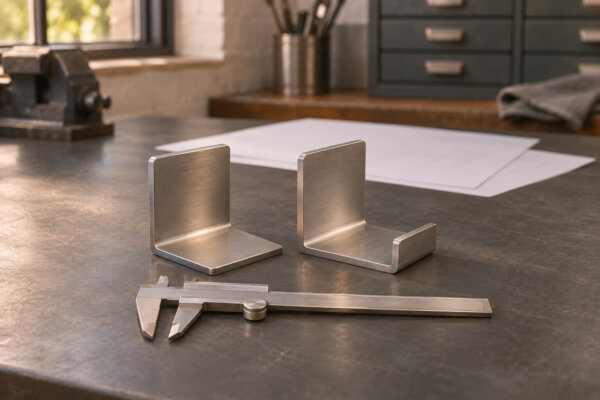
A practical guide to deciding when bespoke platform lifts can share a bracket, with checks for movement, tolerances, service access and drawing revisions.
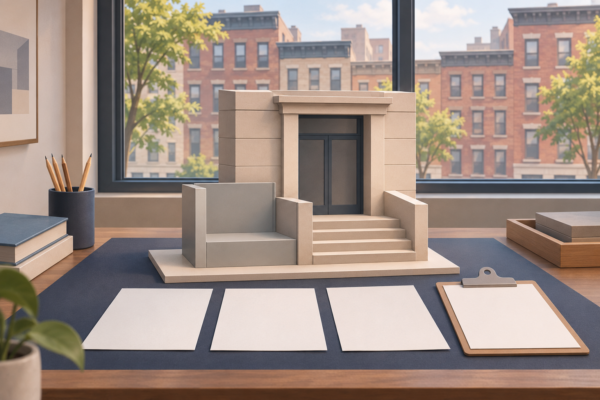
A planning guide for New York City platform lifts covering DOB filings, installer licensing, first inspection and the roles to agree before procurement.