
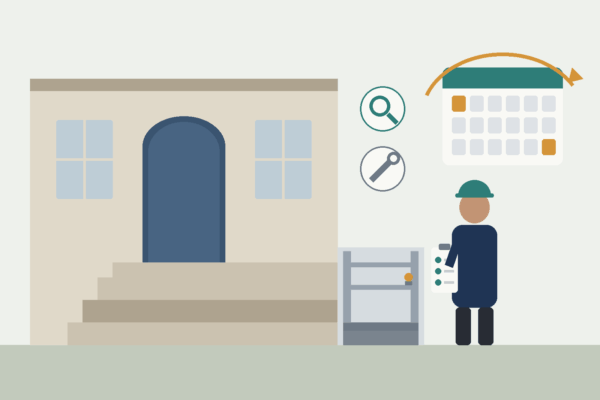
Platform Lift Thorough Examination vs Servicing
In Great Britain, a platform lift used at work needs a LOLER thorough examination by a competent person, normally every six months, separate from its routine servicing.
Early-stage lift budgets allow projects to proceed without design rework or re-specification.
Bespoke accessibility lifts must be budgeted on lifecycle value, not catalogue pricing.
25+ years of installation and service data shows long-life lifts reduce whole-life cost significantly.
Indicative budgets can be generated from drawings alone, without delaying design progress.
Early budget clarity is one of the most overlooked success factors in accessibility lift projects. At concept stage, design teams often need a realistic cost range to proceed, yet are hesitant to engage too early due to the perception that bespoke solutions require full technical specification.
In practice, early-stage budgeting allows informed decisions without locking in design details. Using drawings and known constraints, indicative budgets can be produced quickly, supporting planning, tender preparation, and stakeholder alignment.
As discussed during early coordination conversations, projects frequently require budget confirmation simply to keep momentum and avoid unnecessary redesign.
Across decades of bespoke lift installations, consistent patterns emerge:
Projects that received indicative budgets within 72 hours of drawing review were far more likely to proceed to tender without re-specification.
Lifts engineered for 25+ year service life demonstrate materially lower whole-life cost than 10-year replacement cycles.
Early budget clarity reduces late-stage scope changes that often inflate final costs.
This data reflects real engineering outcomes, not theoretical pricing models. It is one reason Sesame Access places emphasis on early engagement rather than deferring cost discussions.
A common misconception is that bespoke lift budgets are expensive simply because they are bespoke.
In reality, early budgets often appear 40–60% higher than catalogue prices because they include engineering for long-term operation, reliability, and serviceability. Catalogue pricing typically assumes shorter lifespans, standardised environments, and higher replacement frequency.
Comparing bespoke lift budgets to off-the-shelf pricing as like-for-like capital cost is misleading. Whole-life value, reliability, and reduced intervention over decades fundamentally change the comparison.
One persistent myth is that bespoke equals slow.
Indicative budgets can be generated from architectural drawings alone. Full fabrication detail is not required to assess feasibility, footprint, travel height, or integration constraints.
This approach allows design teams to proceed confidently without delaying planning or procurement milestones.
Bespoke engineering is not always appropriate. Standardised lifts may be a better fit when:
The project is a new build with generous pit depths and clear structure.
There are no architectural or spatial constraints.
Initial capital cost is prioritised over long-term performance.
Replacement within 10 years is an acceptable outcome.
Being explicit about these boundaries prevents mis-specification and ensures the right solution is selected for the right context.
| Constraint Factor | Budget Impact | Engineering Trade-Off |
|---|---|---|
| Limited pit depth | Moderate | Eliminates excavation and structural risk |
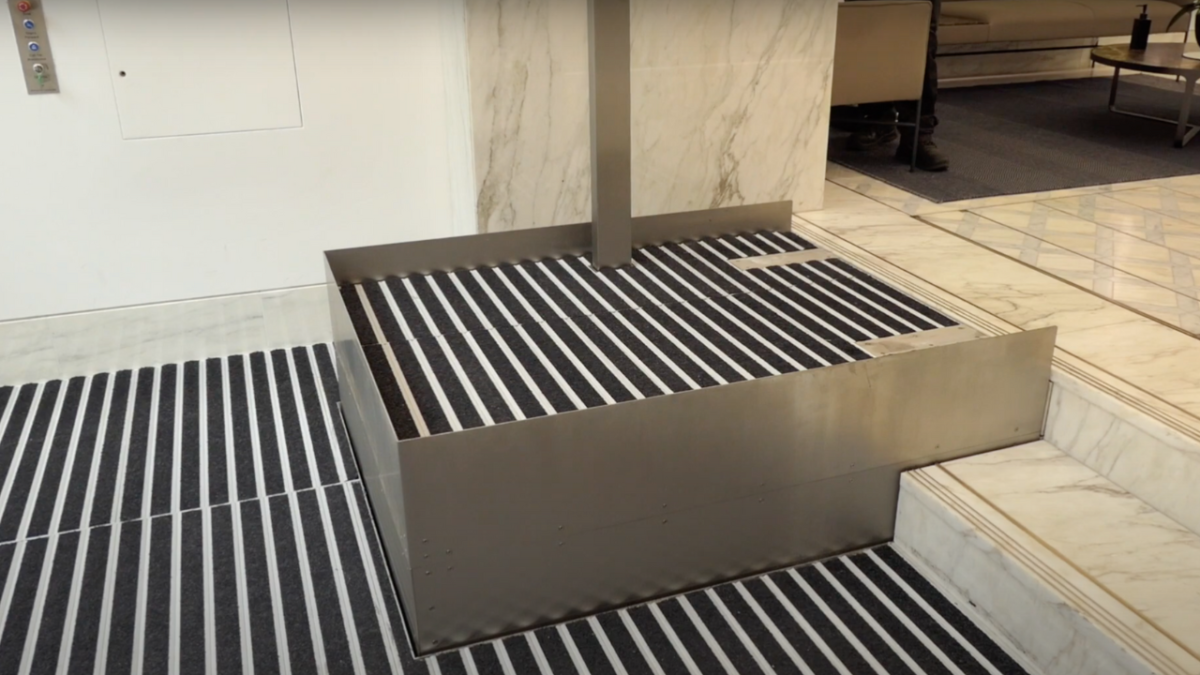
| Short travel (≈495mm) | Low–Moderate | Enables compact lift configurations |
| Architectural sensitivity | Moderate | Reduces visual and planning risk |
| Long service life requirement | Higher initial cost | Lower whole-life cost over 25+ years |
This trade-off analysis reflects real installation patterns and helps teams understand where cost is driven by constraint rather than specification.
Early budgeting works best when the lift typology matches the constraint.
Compact stair-integrated solutions such as the Kensington Stairlift are frequently selected for short rises where space is limited.
Where visual integration and compliance alignment are critical, solutions such as the Westminster Equality Act Lift are often assessed.
For complex or non-standard environments, a fully Bespoke Lift allows engineering to be shaped around the building rather than forcing the building to adapt.
Early budgeting also benefits from understanding how pricing compares to published guidance, such as the stairlift cost context outlined in the stairlift pricing guide, helping teams benchmark expectations accurately.
Budgeting should not stop at installation.
Long-term reliability, serviceability, and parts continuity materially affect total cost. This is why early budget discussions often include reference to long-term support frameworks, such as the approach outlined in bespoke platform lift maintenance over 15+ years.
As highlighted during coordination discussions, field reliability rates of 99.8% and operational lifespans exceeding 25 years fundamentally shift the value equation.
Yes. Concept or planning drawings are usually sufficient to generate an indicative budget.
Bespoke budgets account for long-term operation, integration constraints, and service life rather than short-term capital cost.
No. Early budgets are indicative and refined as the design develops.
Not always, but engineered longevity and reliability are strong indicators of long-term value.
Yes. Comparing several lift typologies early often prevents re-design later.
If you are at concept or early design stage and need realistic budget guidance to keep your project moving, a short discussion can prevent months of uncertainty.
Book a Teams meeting with one of our Project Managers:
👉 https://www.sesameaccess.com/book-a-meeting
Udostępnij
In Great Britain, a platform lift used at work needs a LOLER thorough examination by a competent person, normally every six months, separate from its routine servicing.

A practical checklist for building teams to reconcile lift documents, operator training, outstanding actions and ongoing support before completing a bespoke lift handover.
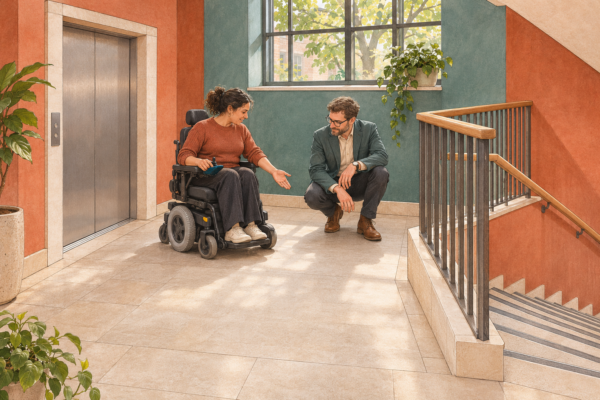
A passenger lift may already serve the floor. Before specifying more equipment, identify the journey that still needs a solution and give the right specialist a clear brief.