

NYC Platform Lift Permits, Installation and Inspection
A planning guide for New York City platform lifts covering DOB filings, installer licensing, first inspection and the roles to agree before procurement.
A planning guide for New York City platform lifts covering DOB filings, installer licensing, first inspection and the roles to agree before procurement.

In Great Britain, a platform lift used at work needs a LOLER thorough examination by a competent person, normally every six months, separate from its routine servicing.

A practical guide to the 2027 machinery rules for lift manufacturers, covering product scope, market routes, conformity assessment, technical files and instructions.

This article documents Docket No. 24-V-358 as a regulatory case study: why ASME A18.1-2003 created conflicts for a lever-supported viewing platform VPL with no upper exit, how ASME A18.1-2020 provisions were used only to support two equivalency arguments, and what conditions the Board attached that became part of inspection and Permit to Operate obligations.
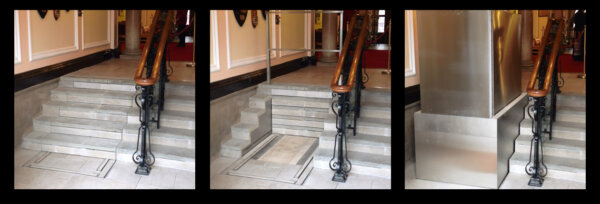
This Knowledge Hub page defines fully enclosed, partially enclosed, and non-enclosed liftways (shafts/runways) in plain English, then explains why EN 81-41 can only be claimed where the liftway is fully enclosed. It clarifies how BS 6440 and ASME A18.1 support open and partially enclosed liftway concepts using guarding and access-control strategies, and sets out how compliant open lift designs in Europe and internationally are delivered through a structured Machinery Directive Annex VIII risk-assessment and technical file route. It also highlights Sesame Access’s strength in combining relevant safety requirements across standards to engineer bespoke, heritage-friendly lifts that remain safe, defensible, and approval-ready when local standards do not directly cover open liftways.
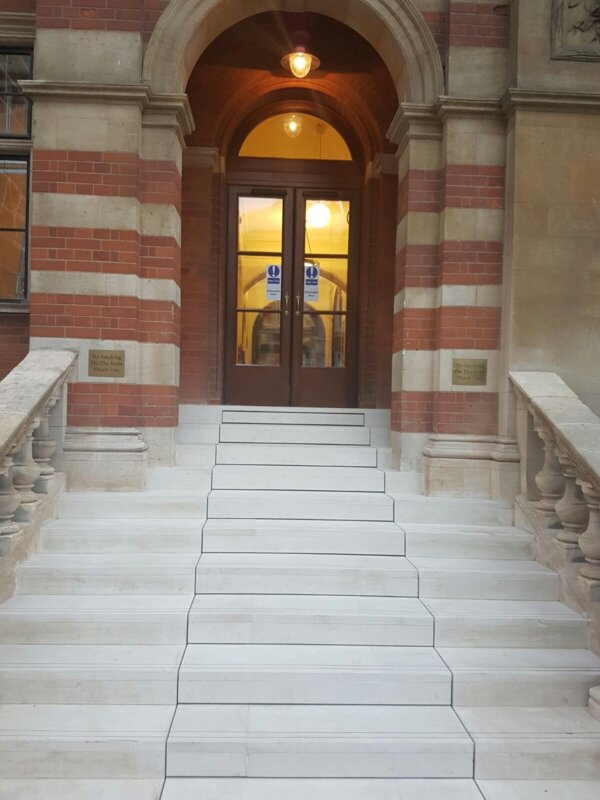
This Knowledge Hub article explains the roll-off guard concept in BS 6440:2011, why CSA B355 has no direct prescriptive equivalent, and how Canadian approvals work in practice. It sets out Ontario’s TSSA compliance hierarchy under O. Reg. 209/01, the realistic variance/equivalency route for non-standard guarding proposals, and when it is more strategic to choose a fully code-aligned lift concept such as the Westminster or Seattle-style barrier approach.
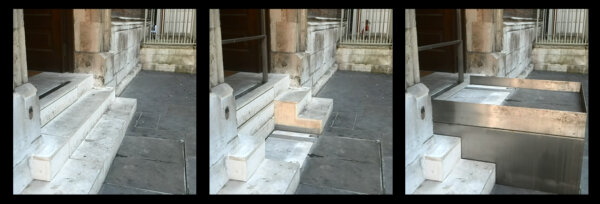
This Knowledge Hub article explains why a 100 mm roll-off guard (toe guard) cannot be used as fall protection for standing users on a vertical platform lift. It focuses on EN ISO 12100 risk reduction hierarchy, DS/EN 81-41:2024 intent, Danish building and workplace law (BR18, BEK 461), and enforcement expectations from Arbejdstilsynet and product oversight bodies. It includes a decision framework, a safeguarding selection matrix, and practical specification guidance for design-sensitive projects.
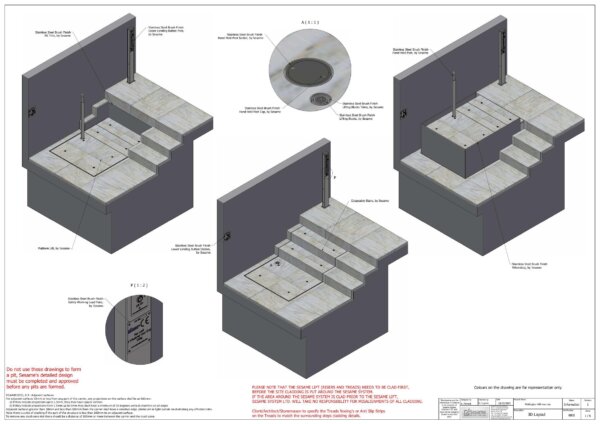
How a hidden platform lift was selected for a Budapest heritage entrance - standards, pit/drainage strategy, access, and Hungary’s post-installation permit route.