Key Takeaways
- Heritage and constrained entrances require a fundamentally different access‑lift design approach.
- Retractable stair and platform lifts introduce additional coordination, safety, and maintenance considerations.
- Designing out risk at concept stage is more effective than managing hazards later through procedures.
- Future maintenance access is a core safety requirement, not an operational afterthought.
- Early technical coordination significantly reduces programme risk, cost escalation, and redesign.
Introduction
Designing accessible entrances in heritage and constrained buildings is one of the most complex challenges in inclusive architecture. Limited space, protected fabric, public safety obligations, and long‑term operational requirements must all be resolved simultaneously.
This Knowledge Hub article explores the engineering considerations that sit behind successful heritage access lift solutions, with a particular focus on retractable stair and bespoke platform lift systems. Rather than presenting a project or case study, this article explains the underlying design thinking that allows safe, compliant, and future‑proof access solutions to be delivered in sensitive environments.
Why heritage and constrained entrances require a different approach
Heritage and architecturally sensitive buildings impose constraints that standard lift systems are not designed to accommodate. Common challenges include restricted footprint, minimal allowable excavation depth, protected materials, and complex stakeholder approval processes.
In these environments, accessibility solutions must be tailored to the building rather than forcing the building to adapt to a predefined product. This is why bespoke access lift engineering is often essential, particularly where retractable stair or concealed platform systems are required.
Designing out risk instead of managing it later
A safety-first approach to accessibility engineering prioritises eliminating hazards at concept stage rather than relying on procedures or warnings later. This principle is central to compliant heritage access lift design and underpins modern regulatory frameworks such as CDM Regulations 2015, which require designers to remove foreseeable risks through design decisions wherever reasonably practicable.
In practical terms, this means planning safe access routes, maintenance zones, and isolation strategies before construction begins. For heritage buildings, where space is limited and future alteration is undesirable, designing out risk early is significantly more effective than attempting to manage it once the lift is operational.
One of the most important principles in complex access lift design is the early identification and elimination of foreseeable risk. When hazards are addressed at design stage, reliance on procedural controls and operational workarounds is significantly reduced.
On constrained projects, this includes designing safe access to lift pits, ensuring clear isolation strategies for electrical and mechanical systems, and providing appropriate lifting and handling provisions for heavy components. The aim is to ensure that future maintenance, inspection, and servicing activities can be carried out safely and predictably.
As one design discussion noted:
“Wherever practical, health and safety risks should be designed out within the element of design rather than controlled later through site procedures.”
Retractable stair and platform lifts, what changes technically
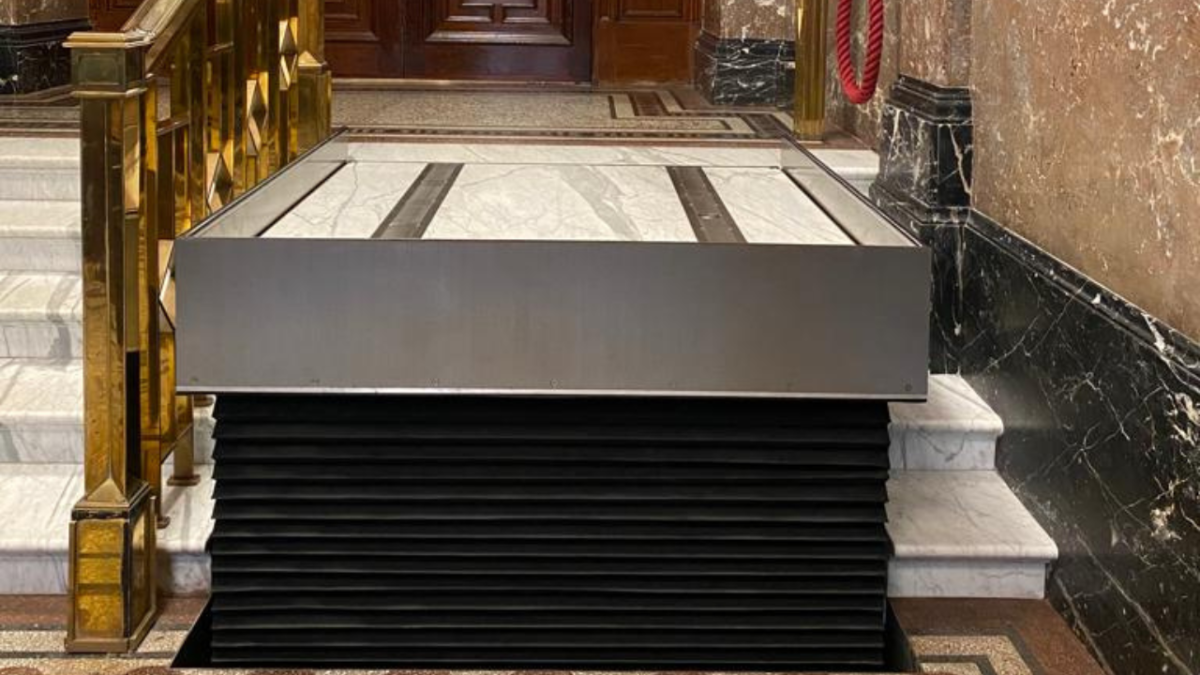
Retractable stair and platform lifts introduce additional layers of technical coordination when compared to conventional access solutions. These systems often combine moving stair elements, platform mechanisms, drainage systems, and architectural finishes within extremely limited envelopes.
Why retractable stairs increase coordination complexity
Retractable stair systems must interface precisely with surrounding stonework, balustrades, handrails, and finishes. Tolerances are tighter, sequencing is critical, and early agreement on interface responsibilities is essential.
This is where bespoke systems such as the Bespoke Lift or Traversing Lift are particularly effective, as they are engineered around the building constraints rather than imposed upon them.
Managing pit depth, drainage, and water ingress
Managing drainage in shallow lift pits is one of the most critical technical challenges in heritage access projects. Restricted excavation depth, protected archaeology, and existing services often limit conventional drainage solutions.
Effective strategies include integrated sump pump systems, clearly accessible drainage channels, and maintenance-safe lifting arrangements for pit covers. Detailed guidance on this topic is explored further in our article on lift pit drainage and installation best practices, which explains how early drainage design directly affects long-term reliability and safety.
Shallow pits are common in heritage environments, but they introduce challenges around drainage and long‑term reliability. Integrated sump pumps, accessible drainage channels, and clear maintenance access routes must all be designed in from the outset.
Failure to address water management early can lead to operational issues, accelerated wear, and increased servicing risk over the life of the lift.
Coordinating lift, structure, and services
Successful heritage access projects rely on close coordination between lift engineering, structural design, electrical services, and architectural detailing. Lighting, power supplies, drainage, and control equipment must be aligned spatially and functionally to avoid late‑stage clashes and redesign.
Designing for future maintenance and safe access
Future maintenance requirements should be treated as a core design input rather than a downstream operational issue. This includes safe access to lift pits, clearly defined lifting points for heavy covers, and isolation procedures that can be carried out without exposing technicians to unnecessary risk.
Design provisions should also account for non‑routine activities such as inspections, component replacement, and fault diagnosis. In complex buildings, these activities often take place outside normal operating hours and in restricted conditions, making robust design solutions essential.
As one maintenance consideration highlighted:
“Access to lift pits and service zones should only be undertaken under controlled conditions, with appropriate equipment and clear isolation procedures in place.”
Why early coordination saves time, cost, and risk
Early coordination between designers, engineers, and stakeholders is essential when planning access lifts in constrained or heritage environments. Engaging in structured design discussions at concept stage allows risks to be identified, responsibilities clarified, and viable solutions agreed before works commence.
Sesame encourages early technical collaboration through structured design workshops and remote design reviews. These early conversations, often hosted via Teams-based accessibility design meetings, help align architectural intent, engineering constraints, and long-term maintenance requirements before decisions are locked in.
Early technical coordination is one of the most effective ways to reduce programme risk on complex access projects. Engaging lift engineers, designers, and stakeholders early allows constraints to be understood, interfaces to be defined, and realistic solutions to be developed before construction begins.
This approach reduces late design changes, avoids unnecessary compromises to heritage fabric, and creates a clearer path through approvals and delivery. It also enables realistic planning around installation sequencing, access logistics, and future servicing requirements.
Product Integration Summary
| Constraint | Standard access lift approach | Bespoke Sesame engineering solution |
|---|---|---|
| Pit depth | Fixed minimum pit requirements | Shallow or variable pit depths engineered to site constraints |
| Drainage | Often limited or omitted | Integrated drainage channels and sump pump systems |
| Maintenance access | Reactive access planning | Maintenance-safe access designed at concept stage |
| Risk management | Procedural controls | Hazards designed out through engineering |
| Heritage fabric | Modified to suit equipment | Preserved through bespoke coordination |
| Design constraint | Standard approach | Bespoke Sesame approach |
| Footprint | Fixed layouts | Engineered to site conditions |
| Pit depth | Pre-set minimums | Shallow or variable pit solutions |
| Drainage | Often omitted | Integrated drainage and sump access |
| Maintenance access | Reactive | Designed‑in from concept stage |
| Heritage fabric | Modified | Preserved and respected |
Systems such as the Windsor Lift demonstrate how bespoke engineering can resolve multiple constraints simultaneously without compromising usability or safety.
Frequently Asked Questions
How do you design access lifts for heritage buildings?
Designing access lifts for heritage buildings starts with understanding physical constraints, regulatory obligations, and long-term use. Bespoke engineering allows lift systems to be shaped around the building, protecting historic fabric while delivering safe, compliant access.
How do you ensure safe access to lift pits during maintenance?
Safe lift pit access is achieved by designing in controlled entry points, appropriate lifting arrangements for pit covers, clear isolation procedures, and sufficient working space for maintenance personnel. These measures reduce reliance on procedural controls and improve long-term safety.
How do you manage drainage in shallow lift pits?
Drainage in shallow lift pits is managed through integrated sump pump systems, accessible drainage channels, and early coordination with structural and services engineers. Planning drainage at concept stage prevents future reliability issues.
What standards apply to heritage access lift design?
Standards such as BS 6440:2011 and CDM Regulations 2015 guide heritage access lift design. In practical terms, this means ensuring lifts are safe, maintainable, and designed to eliminate foreseeable risk rather than managing hazards through signage or procedures.
Why is a safety-first approach important for bespoke lifts?
A safety-first approach ensures risks are addressed through design rather than operational workarounds. This results in safer installations, reduced maintenance risk, and greater confidence for building owners and operators.
How early should an access lift be considered on a heritage project?
Ideally at concept stage. Early consideration allows constraints to be understood and risks to be designed out before they become programme or cost issues.
Are retractable stair platform lifts suitable for public buildings?
Yes, when they are specifically engineered for public use, compliant operation, and long‑term maintenance access.
How is drainage managed in shallow lift pits?
Through integrated drainage channels, sump pumps, and accessible maintenance points designed into the lift pit layout.
What makes a lift future‑proof in a constrained building?
Clear maintenance access, safe isolation procedures, durable materials, and design decisions that anticipate long‑term servicing requirements.
Do bespoke lifts comply with modern safety standards?
Yes. Bespoke solutions are engineered to comply with relevant standards while adapting to the constraints of the building.
Why do standard lifts often struggle in heritage environments?
Because they are not designed to accommodate restricted space, protected fabric, or complex interface requirements.
Next steps
If you are exploring an access solution for a constrained or heritage building, an early technical conversation can clarify feasibility, risks, and options before design decisions are locked in.
Book a Teams meeting with one of our Project Managers to discuss your project: https://www.sesameaccess.com/book-a-meeting