
Key Takeaways
- Accessibility and heritage preservation can work together when access solutions are designed around people and historic fabric.
- Many access barriers in listed buildings exist because decision-makers are unaware of compliant, reversible options.
- Bespoke lift engineering allows historic entrances and staircases to remain visually unchanged while becoming accessible.
- Early engagement and education help planners, architects, and building owners approve access with confidence.
Introduction: Why disabled access in listed buildings requires a people-first approach
Listed and historic buildings are central to cultural, civic, and educational life, yet many remain difficult or impossible for disabled people to use independently. In most cases, exclusion is not intentional. It is caused by uncertainty around planning rules, fear of harming protected fabric, or the belief that disabled access inevitably compromises heritage value.
Sesame Access exists to resolve this tension. By focusing on people-first design, reversible engineering, and planning-led compliance, listed buildings can remain authentic while becoming genuinely inclusive. This approach reflects wider best practice in bespoke accessibility lift redesign and precision lift engineering, where access is treated as part of a building’s evolution rather than an afterthought.
Why are so many listed buildings still inaccessible to wheelchair users?
Historic buildings commonly present level changes, protected staircases, narrow entrances, and restrictions on permanent alteration. When decision-makers are unfamiliar with compliant access technology, the response is often that nothing can be done.
This leads to reliance on temporary ramps, manual assistance, or restricted routes, all of which undermine dignity, safety, and independence. Over time, this reinforces the misconception that accessibility and conservation are incompatible.
How lack of awareness, not resistance, creates access barriers
Across heritage projects, the most common barrier is lack of awareness. Planners, architects, and building owners may not realise that modern access systems can operate within strict heritage constraints.
When discreet and reversible solutions are demonstrated, planning conversations often shift from refusal to collaboration. Education plays a critical role, particularly when supported by evidence from precision lift engineering and custom accessibility lift redesign in listed environments.
How bespoke access lifts protect historic fabric and character
Unlike generic lifts or ramps, bespoke access systems are designed around the building itself. This approach allows important architectural features to be retained while introducing safe, compliant access. Typical strategies include:
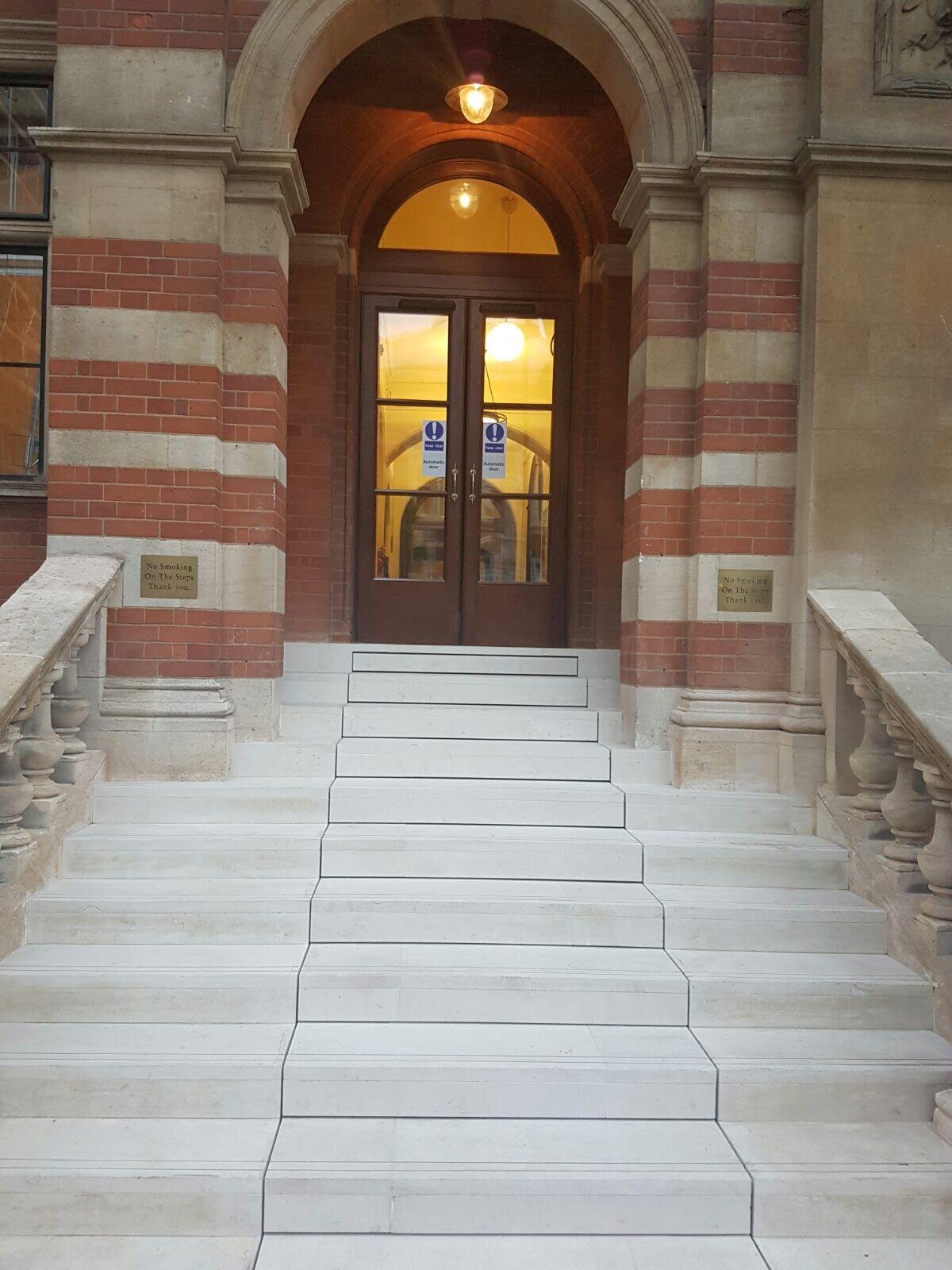
- Retaining significant elements such as arches, balustrades, railings, and decorative stonework
- Removing non-original or unsafe steps while preserving protected fabric
- Concealing lift mechanisms within existing staircases or floor voids
- Allowing staircases to return to their original appearance when the lift is not in use
Solutions such as the Traversing Lift for concealed stair access in listed buildings and the Windsor Lift for heritage-sensitive external entrances demonstrate how access can be delivered without permanent visual impact.
How to overcome planning permission challenges for disabled access in listed buildings
Common planning concern: permanent alteration of protected fabric
Planning authorities are rightly cautious when reviewing proposals for listed buildings. A frequent concern is that lifts will permanently alter or remove protected features.
Evidence-based response using reversible lift engineering
Sesame Access systems are designed to be fully reversible. Original materials can be retained, reinstated, or carefully relocated, ensuring that historic value is preserved. This approach aligns with planning guidance and is supported by real-world approvals across sensitive heritage settings.
The Westminster Equality Act Lift for planning-compliant heritage access is engineered specifically to meet equality legislation while respecting conservation requirements.
Why accessibility is part of a building’s living heritage
Heritage is not limited to physical materials. It also includes how buildings are used and who is able to participate in them. Excluding disabled people risks turning historic spaces into static exhibits rather than living environments.
Sensitive access interventions allow buildings to reflect contemporary values while maintaining authenticity. In many cases, original materials can be displayed, interpreted, or reused elsewhere within the building, preserving narrative history alongside physical fabric.
Access Solutions Comparison: bespoke lifts versus generic alternatives
Planning authority concerns and evidence-based responses
- Concern: lifts will permanently alter Grade II listed fabric Reality: Sesame Access systems are fully reversible and preserve original materials
- Concern: access solutions will visually dominate historic entrances Reality: mechanisms are concealed and stairs return to their original appearance
- Concern: modern lifts conflict with conservation principles Reality: precision lift engineering aligns with heritage guidance and planning policy
Product Integration Summary: matching access problems to engineered solutions
Frequently Asked Questions about disabled access in listed buildings
Can you install a lift in a listed building?
Yes. With the correct design approach, lifts can be installed while protecting historic fabric and meeting planning requirements.
Can access lifts work in buildings without lift pits?
Yes. Many bespoke systems are designed to operate without pits or shafts, making them suitable for sensitive buildings.
What are the BS6440 requirements for heritage access lifts?
BS6440 applies to short-rise platform lifts in the UK and allows greater flexibility for heritage environments when correctly applied.
Are temporary ramps compliant for listed buildings?
Temporary ramps are often non-compliant due to gradient, safety, and usability issues.
Do access lifts need to be visible when not in use?
No. Many systems are concealed and allow staircases to return to their original appearance.
How do planners usually respond to bespoke access solutions?
Where reversibility and minimal impact are demonstrated, planning responses are typically positive.
Can lifts be removed in the future?
Yes. Reversibility is a core design principle for heritage access systems.
Are bespoke lifts more expensive than generic alternatives?
Initial costs may be higher, but long-term compliance, safety, and approval success often reduce overall project risk.
Do access improvements affect building insurance?
Permanent, compliant solutions often reduce liability compared to temporary or manual access arrangements.
Can access lifts serve both seated and standing users?
Certain systems, including equality-compliant lifts, are designed to support both user types.
Will access installations delay renovation projects?
Early integration into design and planning stages typically reduces delays.
Are bespoke lifts acceptable in Grade I listed buildings?
Each case is assessed individually, but reversible and concealed systems are often the most viable option.
Can access solutions be integrated during refurbishments?
Yes. Integration during refurbishment is often the most effective approach.
Who should be involved early in access planning?
Architects, planners, access consultants, and lift engineers should collaborate from the outset.
Next Steps: speak to a heritage access specialist
Every listed building presents unique challenges. Early, informed discussion helps identify compliant solutions and avoids unnecessary refusals.
Book a Teams meeting with one of our Project Managers to discuss people-first access solutions: