Key takeaways
-
This article explains how a bespoke pop-up platform lift can solve limited pit depth, tight rooftop spaces and strict aesthetic constraints while still meeting Equality Act duties.
-
It sets out key technical requirements for architects and engineers, including typical platform sizes, safe working loads, pit drainage, power, control panel locations and code compliance.
-
It shows how pop-up lifts integrate with stair protection measures such as rising barriers, linking to rising barrier stairwell safety and timber staircase rising barrier design.
-
It references Sesame product solutions such as the Pimlico Lift, Westminster Equality Act Lift and Kensington Stairlift to illustrate real-world applications.
-
A short FAQ and clear call-to-action help building owners and design teams move from concept to a fully coordinated, people-first accessibility solution.
Introduction: solving access where pits are shallow and aesthetics matter
Architects and engineers are often asked to “make it accessible” in spaces that were never designed for lifts. Limited pit depth, congested rooftop plant zones, tight control panel locations and strict façade or terrace design constraints can make a conventional lift impractical. At the same time, the Equality Act 2010 expects reasonable adjustments that give disabled users safe, dignified access.
This article explains how a bespoke pop-up platform lift can be engineered into a rooftop or terrace environment, drawing on a project where the lift needed to rise more than 3 metres, sit flush with the surrounding floor, and work within a very tight footprint. It is written for architects, services engineers, vertical transportation consultants and building owners who need reliable, technically robust guidance rather than generic marketing claims.
What is a bespoke pop-up platform lift in technical terms?
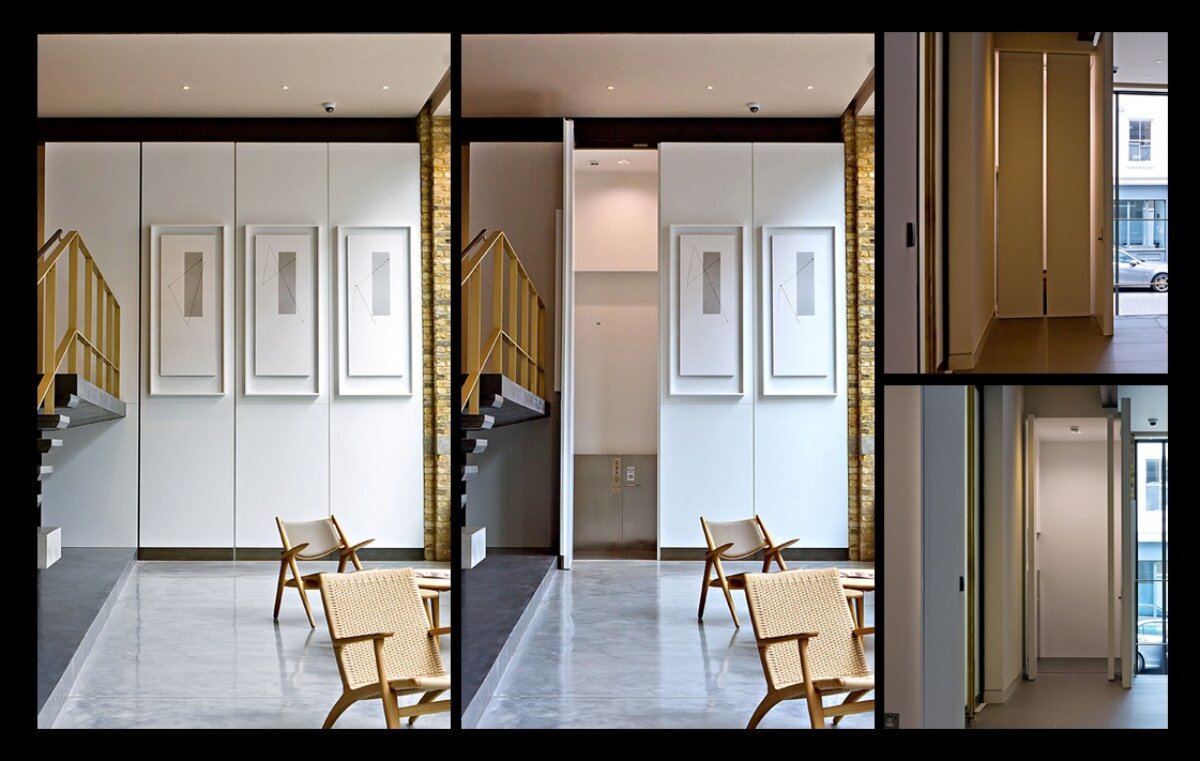
A pop-up platform lift is a vertically moving platform that sits flush with the surrounding floor when parked and rises on demand to bridge a level change. In this project, the platform provided step-free access between an upper terrace and a lower level while preserving a clean, uninterrupted deck when not in use.
Key technical characteristics from the design discussion include:
-
Usable platform space diameter of approximately 1600 mm, suitable for a wheelchair user and accompanying person.
-
Safe working load in the range of 350–500 kg to cover powered wheelchairs, attendants and small equipment.
-
Hydraulic or scissor-lift mechanism concealed below the terrace, designed to lock positively at the upper level to form a weather-resistant seal.
-
An eight millimetre perimeter gap around the moving platform, sized to balance drainage needs and entrapment risk.
Where the architectural language requires the lift to be “invisible” when parked, this style of pop-up solution can be detailed so that the surface finish matches surrounding stone, timber or composite decking. Products like the Pimlico Lift are specifically designed to achieve this kind of concealed integration.
How does the design respond to common architect pain points?
Limited pit depth and congested structure
Rooftop and terrace projects often have shallow structural zones, clashes with drainage runs and limited depth for lift pits. In this case the design team had to work within a drop of roughly one metre below the slab to accommodate the lift mechanism and drainage pipework, while still maintaining structural performance.
The solution involved:
-
Coordinating the base slab thickness and reinforcement to carry concentrated lift loads at four loading points.
-
Allowing for a drainage pipe of 50–100 mm diameter dropping from the terrace slab into the drainage network below.
-
Ensuring pit depth and structural build-up could be achieved without conflicting with existing beams, services or plant.
For projects with timber staircases or complex stair cores, the pop-up lift can be combined with protective barriers. The articles on rising barrier stairwell safety and timber staircase rising barrier design explain how Sesame coordinates moving barriers and hidden lifts to protect stair edges while maintaining clean sightlines.
Preserving heritage or high-value aesthetics
Where terraces overlook heritage façades or premium city views, exposed lift shafts and bulky enclosures are visually unacceptable. A pop-up platform lift allows the entire mechanism to disappear below floor level when not in use, with only a subtle joint line indicating the platform perimeter.
In other contexts, vertical lifts such as the Westminster Equality Act Lift or stair-integrated systems like the Kensington Stairlift can be used to provide full compliance while keeping the original stair and façade design visually dominant.
Which technical specifications do engineers need at Stage 3–4?
From the transcript, the engineers mainly needed clarity around space take and service connections rather than full bracket-level fabrication drawings. For Stage 3–4 design, the following data is typically required.
Power requirements
-
Three-phase power supply (project discussions referenced a three-phase 230 V supply; in practice many systems will use three-phase power within the common 230–400 V range depending on country and site).
-
Final absorbed power rating and motor size to be provided on a data sheet so the electrical engineer can size circuits correctly.
-
Termination strategy: the building electrician normally provides a suitably rated isolator and power feed to the lift control panel; the lift specialist then connects within the panel.
Control panel location and cabling
-
Control panel to be located within a nominal 10 metre cable route length from the lift mechanism to avoid excessive voltage drop and over-sizing of cables and hydraulic hoses.
-
Exact panel dimensions, access clearance and ventilation requirements to be reserved in plant or riser areas, already competing with other building systems.
-
Typical operation via key switches and pushbuttons at the terrace level and lower access level, with the option to issue keys to trained users for independent operation.
Drainage and water management
-
Eight millimetre gap around the platform edges allowing rainwater to fall into the pit when the lift is down.
-
Terrace surface graded slightly away from the lift opening when the lift is locked in the raised (flush) position to minimise water ingress to the shaft.
-
Dedicated gully or drain within the pit, typically 50 mm diameter but with a preference for 100 mm where coordination allows, to remove water and leaf debris.
Regular maintenance visits include cleaning the pit, gully and perimeter gaps to manage autumn leaf fall and long periods of downtime. Because access into the pit is only safe with the lift mechanically supported and locked, this work is carried out by trained lift engineers as part of the service plan.
How does the pop-up platform lift interface with BMS, fire and safety systems?
BMS and status monitoring
Rather than using Modbus or BACnet, the control philosophy described in the meeting uses volt-free relays to provide signals such as “lift in fault” or “lift not available” to the building management system. The BMS can then display alarms and help facilities teams coordinate responses without directly controlling lift movements.
Fire alarm interface
A volt-free fire alarm contact instructs the lift to shut down during a fire event so it does not operate when escape routes must be kept clear. The lift is not an evacuation lift and is not enclosed in a fire-rated shaft. For this reason it cannot be relied upon as a means of escape under BS EN 81-72 or similar evacuation lift standards.
Where the building has a life-safety generator, the fire engineer and design team must decide whether the pop-up lift is treated as “essential” for compartmentation (for example, to re-seal the terrace opening after emergency use) or remains non-essential and operates only under normal mains power.
Power failure and emergency operation
In the discussed project, a 24 V battery system allows the hydraulic valve to open and the lift to descend by gravity in the event of a mains power failure, bringing the platform to the lower level and releasing the door locks. Users can then exit safely.
An optional UPS or standby supply can be considered if the design team wants the lift to rise back to the upper level after an outage to reinstate weather and drainage seals.
Which standards and directives apply to bespoke pop-up lifts?
Because this is a bespoke piece of equipment with travel greater than 3 metres, the design draws on several regulatory frameworks.
-
BS 6440:2011 provides guidance on powered lifting platforms for disabled persons and informs many of the safety and control features.
-
BS EN 81-41 covers vertical lifting platforms intended for use by persons with impaired mobility and is referenced where appropriate to platform lifts.
-
The Machinery Directive (Annex VIII) provides the overall conformity assessment route for bespoke machinery of this kind, with the lift certified as a machine rather than as a conventional passenger lift.
-
Equality Act 2010 obligations ensure that the overall solution remains focussed on providing reasonable, dignified access rather than a minimal, box-ticking response.
For stair and barrier integration around the lift, further guidance is available in the Knowledge Hub articles on rising barrier stairwell safety and timber staircase rising barrier design. External resources such as British Standards Institution publications can also be referenced for a full technical understanding of the standards cited.
How does this approach protect user dignity and manage risk?
A recurring theme in the design discussion is that the lift should be safe, intuitive and as low-stress as possible for the end user. In many cases, regular users may be issued a key and trained in the simple operating steps so they can independently access the roof terrace or upper level.
People-first considerations include:
-
Ensuring the platform is large enough for a wheelchair and a companion without feeling cramped.
-
Providing controls that are clearly labelled, reachable and consistent across levels.
-
Reducing the chance of standing in the rain while waiting for the lift, by encouraging users to return it to the raised, sealed position when not needed.
-
Training staff so they can confidently support visitors who may be unfamiliar with the system.
Products like the Westminster Equality Act Lift and Kensington Stairlift were developed with the same philosophy: meet the legal standard, but also protect dignity, reduce anxiety and make access feel as simple as using any other part of the building.
Frequently Asked Questions (FAQ)
Can a pop-up platform lift travel more than 3 metres?
Yes, pop-up lifts can be engineered for travel greater than 3 metres, but they then fall outside many “standard” platform lift configurations and are typically treated as bespoke machines under the Machinery Directive with relevant elements of BS 6440:2011 and BS EN 81-41 applied.
What safe working load should I allow for?
A typical design range is 350–500 kg safe working load. This allows for a powered wheelchair, user, assistant and a margin for small equipment. The exact value is confirmed in the lift data sheet and specification.
How much space do I need for the pit and mechanism?
Pit depth is driven by travel, mechanism choice and drainage. As a guide, the project discussed accommodated the lift mechanism and drainage in approximately one metre of depth below the finished terrace slab, but this must always be confirmed against site-specific structure and services.
How close does the control panel need to be?
The control panel is usually kept within a 10 metre cable route length from the lift mechanism. Longer runs are possible but may require upsizing of cables or hydraulic hoses, which has cost and coordination implications.
How is water and debris managed?
Rainwater passes through the narrow perimeter gap into a drained pit. The terrace is slightly graded to keep most water on the surface when the lift is in the raised, sealed position. The service regime includes regular pit and gully cleaning to manage leaves and debris, particularly in autumn.
Call to action
If you are exploring how a bespoke pop-up platform lift, rising barrier system or integrated stair solution could work in your project, we would be happy to help. Book a Teams meeting with one of our Project Managers to walk through your drawings, constraints and objectives: