Key Takeaways
-
Accessibility lift projects fail when logistics decisions happen too late
-
Early agenda planning prevents site delays, compliance issues, and cost overruns
-
Export documentation, lifting constraints, and finishing decisions must be resolved before site work begins
-
Structured weekly planning protects both project timelines and on-site engineers
Introduction
Accessibility lift projects fail when logistics decisions happen too late. Missed export constraints, unresolved lifting routes, or late-stage finish changes can quickly cause site delays, compliance risks, and unexpected cost overruns.
This article explains how structured agenda planning helps prevent these issues. By identifying technical, logistical, and regulatory challenges early, Sesame Access ensures complex accessibility lift projects progress smoothly, safely, and predictably.
This approach builds on the principles outlined in our earlier article, How Sesame Access Manages Complex Lift Projects, focusing specifically on how early logistics and agenda reviews protect real-world delivery.
Who This Article Is For
This article is written for architects, access consultants, and project managers planning accessibility solutions in heritage buildings or complex architectural environments where logistics, compliance, and sequencing are critical.
Problem: Why Accessibility Lift Projects Stall on Site
Many accessibility lift projects encounter delays not because of design errors, but because logistical decisions are left too late. Common issues include specialist tools becoming unavailable, export documentation preventing equipment movement, and lift assemblies proving impossible to manoeuvre through completed buildings.
When these problems are discovered on site, resolution often requires redesign, remanufacture, or costly programme extensions.
Solution: How Early Agenda Reviews Prevent Delays
Structured agenda reviews allow technical and logistical risks to be identified before manufacture or installation begins. Weekly planning ensures that export constraints, lifting routes, finishing processes, and programming dependencies are resolved early, when changes are still manageable.
This planning discipline ensures decisions are made deliberately rather than reactively.
How Early Agenda Reviews Resolve Complex Export Constraints
Temporary export documentation can restrict how tools and equipment move between countries. When equipment is listed under a single carnet, all items must typically leave and return together.
Early agenda planning identifies whether engineers need personal or specialist tools independently of larger equipment. This prevents scenarios where engineers are left unable to work or return due to documentation constraints.
How Lifting and Handling Constraints Are Solved Before Installation
Large or non-boltable lift assemblies require careful handling planning. Decisions such as whether equipment can pass through doors, windows, or restricted access routes must be made before manufacture is finalised.
For example, projects using systems like the Westminster Equality Act Lift often require early lifting route planning due to their large, integrated assemblies. Identifying these constraints early avoids last-minute dismantling or redesign.
How Agenda Planning Protects Complex Lift Designs
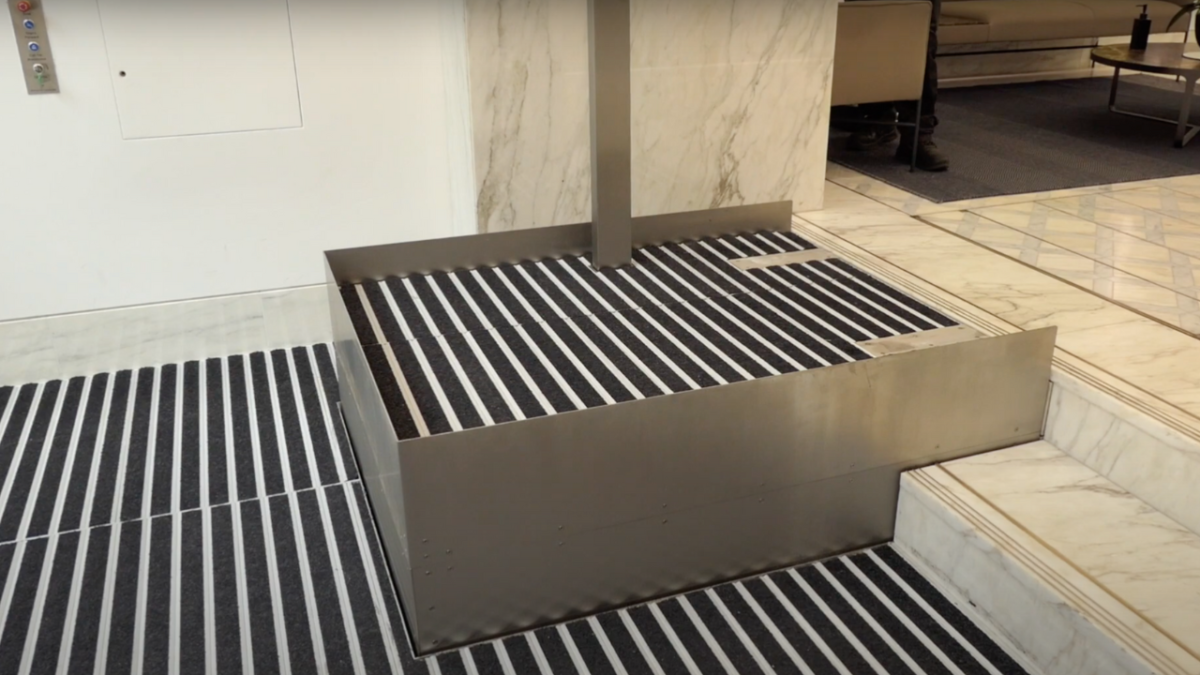
Some accessibility lifts incorporate integrated stair structures, rising barriers, or concealed mechanisms that cannot be disassembled easily. Systems such as the Thames Retracting Stair Lift depend on early sequencing decisions to ensure they can be delivered and installed without compromise.
Agenda reviews ensure these design realities are considered alongside architectural and programme constraints.
Standardised Sample Reference and Finishing Capabilities
Early agenda planning also prevents confusion around finishes and manufacturing capabilities. Sesame Access distinguishes clearly between in-house finishing processes and specialist external treatments.
In-house powder coating is typically used where durability and programme certainty are required. External finishes such as chemical blacking or specialist electroplating may offer different aesthetic results but can introduce longer lead times and additional handling requirements.
By standardising how finishes are discussed at agenda stage, projects avoid late-stage changes that could delay delivery or require full unit reprocessing.
How Structured Planning Supports Bespoke Platform Lift Projects
Projects involving large platform lifts, such as those similar to the British Library Platform Lift, often involve complex handling, access constraints, and programming coordination.
Agenda planning ensures that fabrication, finishing, logistics, and installation sequencing remain aligned throughout the project lifecycle.
Technical Logistics FAQ
What is a carnet and why does it matter for lift projects?
A carnet is a temporary export document that allows equipment to move between countries without import duties. Items listed on a carnet must usually leave and return together, which affects how tools and equipment can be moved.
Can engineers bring personal tools back separately?
Often no. If tools are listed under a shared carnet, they may be legally required to return with the rest of the equipment unless alternative documentation is arranged in advance.
What is a non-boltable lift unit?
A non-boltable lift unit is a system that cannot be disassembled into smaller parts without compromising its integrity. These units require early lifting and access planning.
Why is early lifting route planning critical?
Once building finishes are complete, access routes may be restricted. Early planning ensures lifts can be moved safely without structural alterations or programme delays.
How do finishing decisions affect logistics?
Certain finishes require external processing or full-unit handling. Identifying this early prevents delays caused by reprocessing completed assemblies.
Next Steps
If you are planning an accessibility lift project with complex logistics, early technical discussion can prevent costly delays later.
Book a Teams meeting with one of our Project Managers:
https://www.sesameaccess.com/book-a-meeting