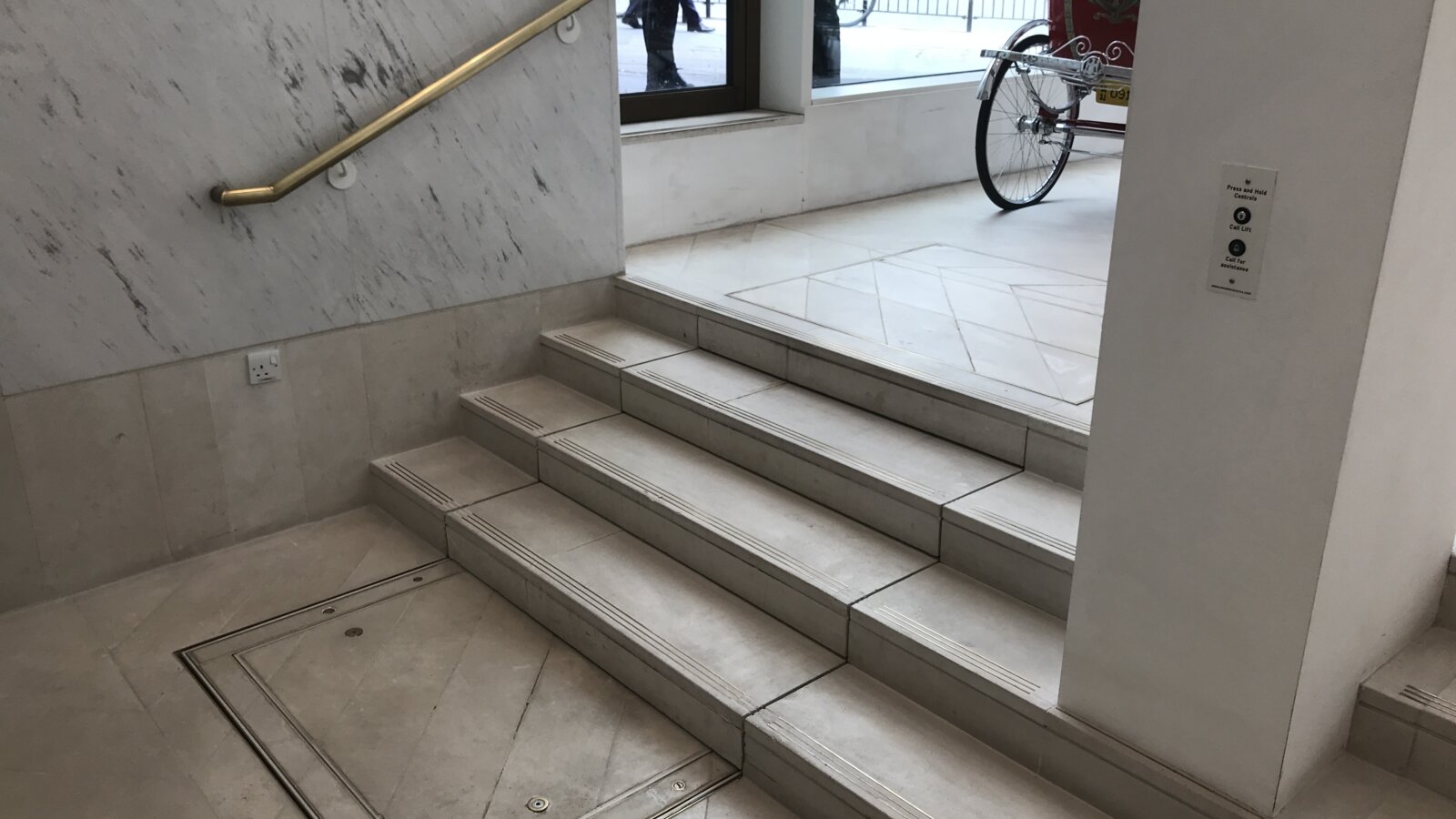
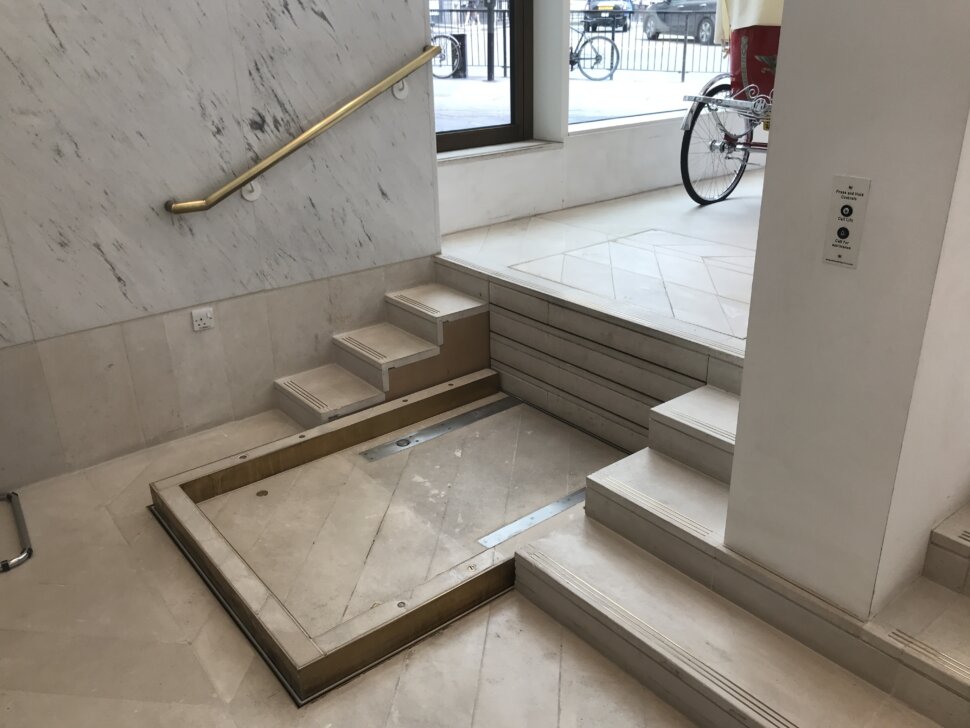
What is the Thames Retracting Stair Lift?
The Thames Retracting Stair Lift is a horizontal retracting stair system that reveals a hidden wheelchair platform lift. It is designed for rises up to 500 mm and does not include an upper landing barrier. When the stairs retract, a void is created, which is why this lift is intended only for managed environments with trained keyholders.
Similar retracting stair products: Kensington Lift
Why is the Thames suitable only for rises under 500 mm?
British Standards require a protective barrier at the upper landing for rises above 500 mm. The Thames is designed specifically for scenarios where the rise is below this threshold. If a barrier is needed, the installation moves into Regent Lift or Jubilee Lift categories.
Why must the Thames be used in managed environments?
Once the stairs retract, a fall hazard is created even at rises below 500 mm. Only trained users with a key should operate the lift to ensure safe use. The lift must be switched off when not in operation.
What is unique about the Thames wheel stop system?
The Thames uses an 80 mm wide electric wheel stop that rises 100 mm around the platform perimeter. It encloses the wheelchair and prevents roll-off. The wheel stop includes obstruction-detection safety edges. This differs from the Kensington Lift, which uses a stainless-steel rising kerb.
What pit depth is required for the Thames Lift?
The platform sits in a 205 mm pit. This shallow requirement makes the Thames ideal for sites that cannot achieve the deeper pit depth needed for the Kensington Lift.
What is the platform size of the Thames?
The platform is approximately 1204 mm wide and 1616 mm long. The larger footprint is caused by the low-profile scissor lift and wheel stop trays.
What is the usable internal platform space?
The internal usable area inside the raised wheel stop system is around 867 mm wide by 1526 mm long, which exceeds the British Standard minimum of 1400 mm usable length.
Why is the Thames platform larger than the Kensington platform?
Because the lifting system is low-profile and the wheel stop trays add width and length. When deeper pit depth is available, the Kensington generally offers a smaller footprint.
How much space is required for the retracting stairs?
The stairs retract horizontally behind the top step riser. Standard space required is 1200 mm, but this can be reduced to a minimum of 800 mm depending on tread depth and riser movement. Reduced space increases complexity and cost.
What determines whether a reduced stair pit (under 1200 mm) is possible?
The bottom riser travel is the key factor. If riser travel is 700 mm or less, the system usually remains economical with a 1200 mm pit. If the space is reduced below 1200 mm, a more bespoke solution is required.
What materials can be used for cladding?
The lift table and wheel stop trays accept cladding through 18 mm trays. Stone, tile, and timber are common. Thicker finishes increase the required pit depth. Around 20 mm is typical.
Floor finishes guide:
https://www.sesameaccess.com/knowledge-hub/access-lift-floor-finishes-guide
Can the machine room be integrated into the lift?
Yes. The hydraulics and electrics can be located in the top step riser. However, an external machine-room cabinet is preferred for long-term servicing access.
General lift product overview:
https://www.sesameaccess.com/lifts
Is the Thames an internal-only lift?
Yes. The Thames Retracting Stair Lift is manufactured exclusively for internal use and does not require any drainage.
How does the Thames relate to the Kensington, Regent, and Jubilee lifts?
Thames: retracting stairs, no barrier, 205 mm pit, sub-500 mm rises
Kensington: retracting stairs, deeper pit, stainless kerb
Regent: retracting stairs with a top gate
Jubilee: platform-only version using the same 80 mm wheel stop system
What if the site has space in front of the bottom step but not behind the top step?
In this case, the Traversing Lift may be more suitable. It rises vertically from the lower level and then moves horizontally over the stairs.
When should the Thames be chosen over alternative models?
The Thames is the correct choice when:
• Rise is under 500 mm
• The client requires retracting stairs
• Only a shallow 205 mm pit is achievable
• A managed-access environment is acceptable
Otherwise, the Kensington, Regent, Jubilee, or Traversing Lift may be more appropriate depending on building constraints.
What is the minimum pit depth for the Thames?
205 mm is the standard pit depth. If cladding thickness increases, the pit depth must increase proportionally.
Can the Thames include a top gate?
Yes, but adding a top gate converts the configuration into the Regent product.
Does the Thames require drainage?
No. The Thames is an internal-only product.
Can trims be customised?
Yes. Trims can be finished in stainless steel, bronze, or brass. These custom finishes increase cost but improve aesthetic integration.