
Key Takeaways
-
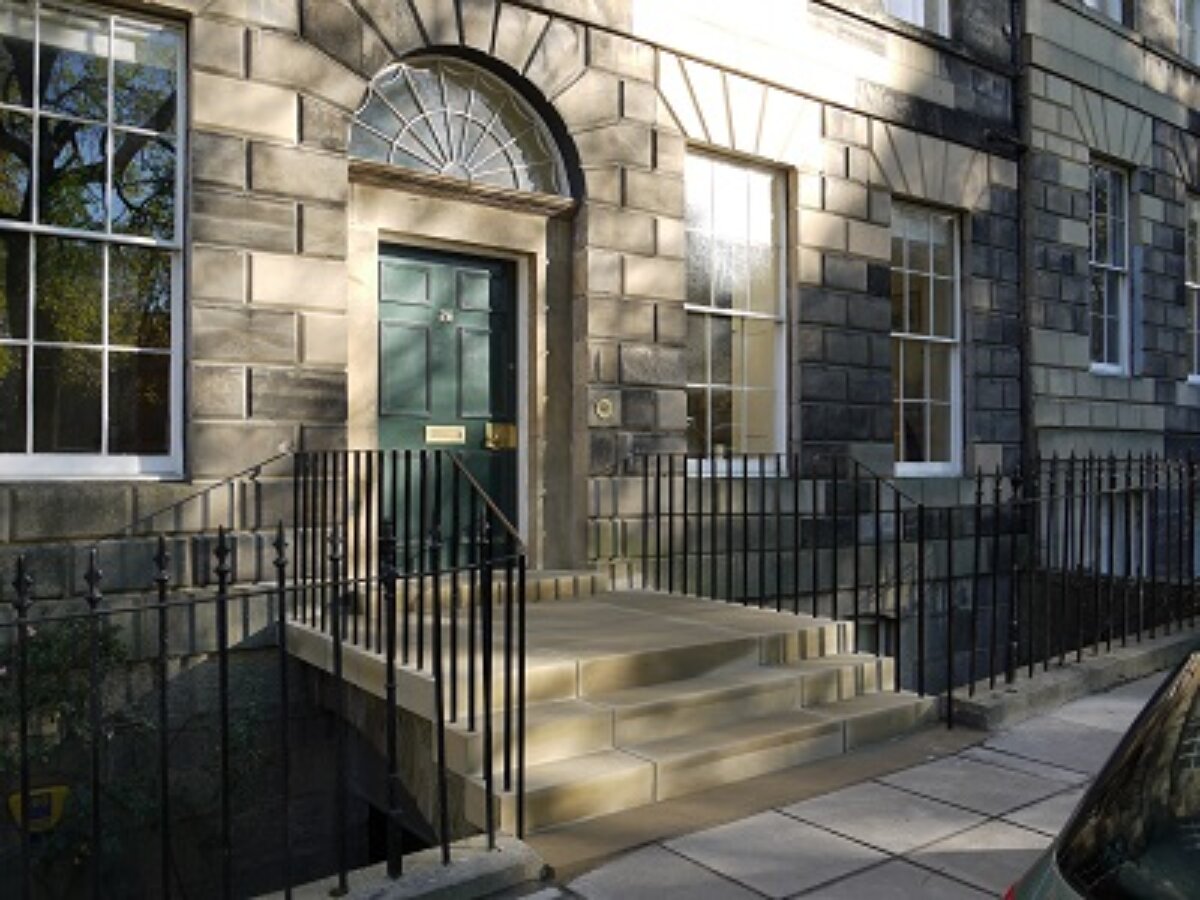
Many London terrace houses include narrow stair bridges and deep lightwells that make wheelchair access extremely difficult, especially where the basement level sits approximately 3 metres below the pavement.
-
A bespoke platform lift can be inserted into the existing stair layout or adjacent side space, maintaining heritage features and supporting planning approval.
-
Solutions such as the Buckingham Lift, Edinburgh Lift and Windsor Lift integrate well into areaways, basements and terrace lightwells typical across central London and UK conservation areas.
-
Adapted iron railings, small turning landings and dual basement exits allow a lift to meet both accessibility needs and operational requirements such as waste movement.
-
This approach is compatible with BS EN 81-41 and can be tailored to platform sizes that suit the constraints of Georgian and Victorian architecture.
Introduction: How do you provide wheelchair access when a Victorian terrace has a 3-metre drop into a narrow basement lightwell?
This is one of the most common design challenges for Georgian and Victorian terrace houses across London, Bath, Edinburgh, Manchester and other UK cities. These properties often have a deep areaway or lightwell beneath the main staircase, creating an immediate 3-metre vertical separation between the ground floor entrance and the basement level.
In this Sesame Access enquiry, a bespoke platform lift is needed to accommodate wheelchair users, goods and bin movements, while fitting into a heritage-sensitive terrace environment. The solution involved creating a new iron-railing gate at the upper landing, adding a small turning platform, and designing a lift route with two basement exits. This project reflects how tailored engineering can unlock accessibility in even the tightest and most historic terrace geometries.
Why Are Georgian and Victorian Terraced Houses So Challenging for Lift Installations?
These buildings typically include:
| Architectural Feature | Accessibility Constraint |
|---|---|
| Basement lightwell or areaway | Creates 2–3m vertical separation requiring a lift |
| Iron railing balustrade | Must be retained or adapted sensitively for planning |
| Narrow stair bridge | Limits platform width and turning space |
| Restricted basement headroom | Complicates shaft wall or door integration |
| Preservation requirements | Demand minimal visual impact |
These constraints require a fully bespoke approach rather than a standard platform lift.
How a Platform Lift Fits Into a Terrace Lightwell or Areaway
A terrace-house lightwell normally contains a structural stair bridge. By adapting the railing to form a gate and constructing a new landing, users can turn safely into the platform lift.
Once inside, the lift can travel the full 3-metre drop and provide two distinct exits:
-
A front exit under the staircase for general circulation
-
A side exit leading directly to a waste-storage area or service corridor
This dual-access approach is frequently required in urban terrace refurbishments where both accessibility and operations must coexist.
The basement door or wall forming part of the lift shaft can be constructed by the main contractor, ensuring the lift integrates neatly with the new structure.
Which Sesame Lift Systems Are Suited to This Type of Terrace-House Configuration?
The layout described in the transcript is highly compatible with several Sesame products:
Buckingham Lift
A hidden lift that retracts into the staircase.
https://www.sesameaccess.com/lifts/buckingham-listed-building-lift
Edinburgh Lift
A hidden lift that retracts into the staircase, common to the Georgian Victorian terrace house staircase layout
https://www.sesameaccess.com/lifts/edinburgh-access-lift
Windsor Lift
A side-space lift used when the main stair bridge cannot house a mechanism but adjacent terrace wall space is available.
https://www.sesameaccess.com/lifts/windsor-lift
These systems support planning and heritage constraints while providing robust, BS 6440:2011-compliant accessibility.
Technical Specification Considerations for Terrace Installations
Architects and contractors typically need clarity on compliance, space and travel requirements. For terrace-house projects, we consider:
-
Vertical travel height: approximately 3 metres
-
Standard platform dimensions typically starting from 900 mm x 1400 mm depending on site geometry
-
BS EN 81-41 Platform lift compliance to the relevant areas of BS 5440:2011 & EN 81-41
-
Structural plant surfaces for the lift to travel against
-
Shaft wall or door integration by the main contractor
-
Options for dual-gate or dual-exit configurations
-
Railing adaptation details for planning applications
This combination of design and engineering ensures a safe, reliable and planning-friendly solution.
Planning Permission and Conservation-Area Sensitivity
Planning teams across central London and conservation areas throughout the UK often require:
-
Retention of iron railings
-
Minimal visual impact from the street
-
Discreet mechanisms
-
Reversible architectural interventions
The Buckingham Lift, Edinburgh Lift and Windsor Lift all offer aesthetic neutrality suitable for heritage settings, helping projects progress smoothly through approvals.
Related Knowledge Hub Articles
These pages expand on the core themes of heritage, engineering precision and coordination:
Accessible heritage staircase solutions
https://www.sesameaccess.com/knowledge-hub/accessible-heritage-staircase-solutions
Designing bespoke heritage staircase lift
https://www.sesameaccess.com/knowledge-hub/designing-bespoke-heritage-staircase-lift
External High-Authority Reference (Admin to Insert Link)
Insert an external reference to a heritage body or BS EN 81-41 safety standard for additional credibility.
Frequently Asked Questions
Can a lift fit into a tight Georgian or Victorian lightwell?
Yes. Terrace areaways are one of the environments Sesame systems are specifically engineered for.
Can the lift support both wheelchair users and goods?
Yes. The configuration described allows for dual use, including access to waste-storage rooms.
Do you need planning permission?
Almost always, especially in conservation areas. Using railing adaptations and hidden mechanisms helps support approval.
Can the lift provide two exits?
Yes. Front and side exits can be engineered into the basement depending on site geometry.
Do you need a visible shaft?
Not necessarily. The basement wall or door can form part of the shaft, keeping the system discreet.
Call to Action
To discuss a terrace house accessibility solution or explore the Buckingham Lift, Edinburgh Lift or Windsor Lift, please book a meeting with one of our Project Managers:
https://www.sesameaccess.com/book-a-meeting