Key Takeaways
• A 20-minute Book a Meeting consultation quickly reveals multiple bespoke lift options tailored to your space.
• Sesame Access often presents two or three engineered solutions for the same challenge, surprising clients who assumed they had only one possible route.
• Early conversations help clarify pit depths, turning circles, fire escape implications, listed-building constraints and budget expectations.
• This article also explores how our approach builds on the engineering thinking seen in Bespoke Scissor Lift Solutions and the projects featured in Innovative Lift Solutions.
Introduction
Sesame Access is a specialist in bespoke, hidden and architectural access solutions. While many clients initially assume that complex sites allow for only one type of lift, a short 20-minute consultation regularly uncovers two or three tailored alternatives that all achieve seamless accessibility. This early insight shapes better designs, avoids unnecessary redesign, and ensures the final solution matches both user needs and architectural intent.
What Can You Discover in a 20-Minute Lift Consultation?
A short Book a Meeting call helps you understand what is genuinely possible on your site. Many clients are surprised to learn that Sesame’s engineering team can adapt movement patterns, platform sizes, pit depths and barrier arrangements to suit tight or irregular spaces.
This differs from standard lift suppliers, who typically offer only fixed models with limited flexibility. Sesame’s bespoke approach allows you to explore options such as a traversing lift, a retracting stair system or a compact hidden lift even in spaces that initially seem impossible.
To explore our wider portfolio, you can also view all accessibility solutions here:
https://www.sesameaccess.com/lifts
Why Are Multiple Options So Valuable?
Standard platform lift companies usually present one solution. In contrast, Sesame’s bespoke engineering often provides several routes that meet the same access requirement. This tailored approach allows you to compare:
• different movement patterns
• different pit depths
• hidden versus visible solutions
• listed-building compliance options
• fire escape implications
This helps architects and access consultants make decisions based on real engineering feasibility rather than assumptions that limit design freedom.
What Happens During the Call?
The meeting is informal, visual and collaborative. A project manager will:
• review drawings or photographs
• confirm rises, widths and potential pit depths
• discuss turning circles and user requirements
• explain how solutions like the Wellington Lift, Traversing Lift, and The People’s Lift differ
• highlight any planning or fire-escape considerations
• outline budget ranges for each route
This conversation is often where clients discover solutions they did not know existed.
Which Lift Types Are Commonly Explored?
Traversing Lift
The traversing lift rises vertically and then travels horizontally to land level. It is ideal for narrow entrances, restricted stair widths or locations where steps and handrails would otherwise create crush hazards. For more insight into this type of engineering, see the related article:
Bespoke Scissor Lift Solutions
Wellington Lift
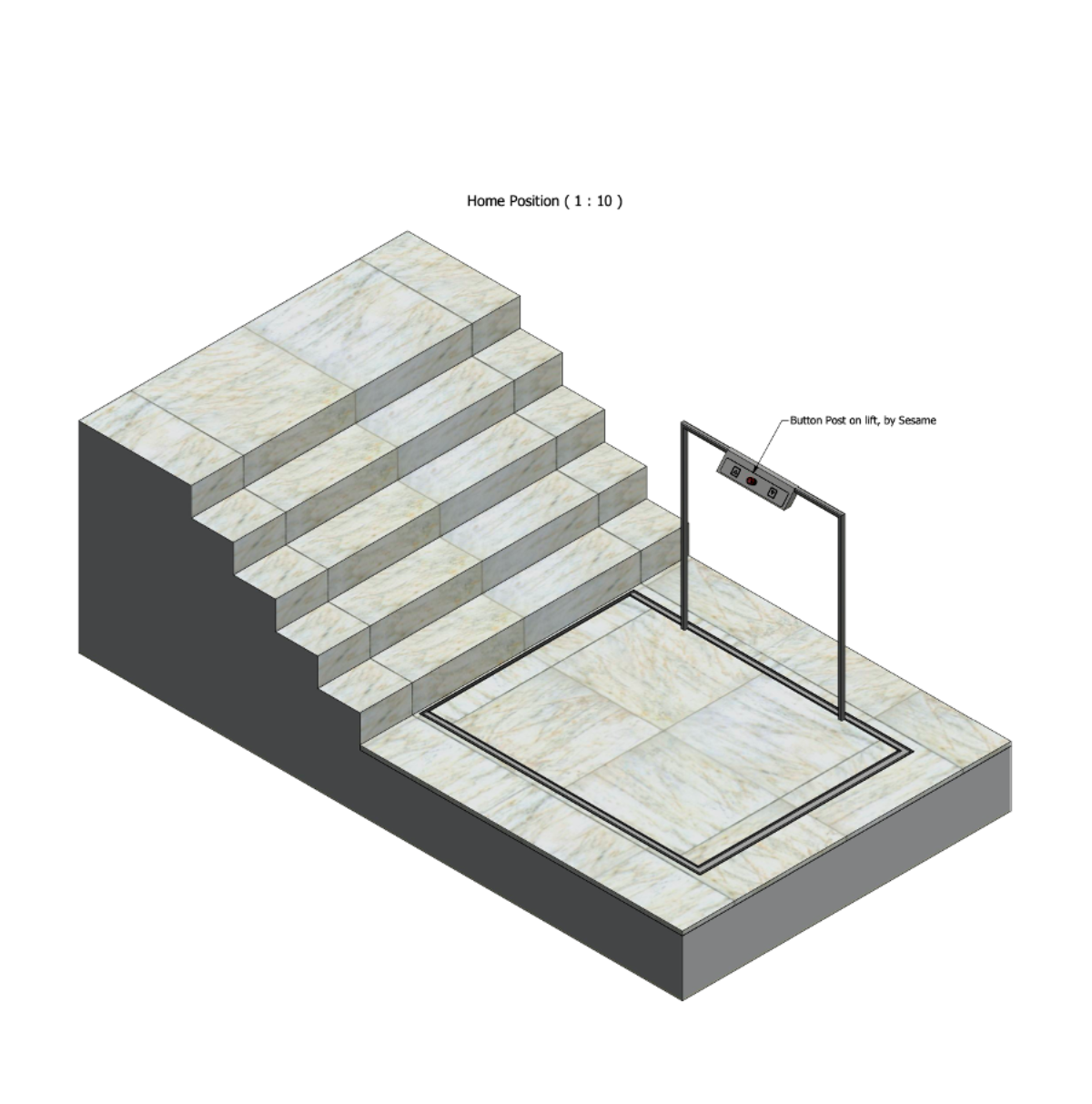
The Wellington Lift uses vertically retracting stairs to hide the lift entirely when not in use. It is well-suited to listed buildings where visual impact is a key factor, reflecting the innovative practices described in
Innovative Lift Solutions
The People’s Lift
A compact, elegant platform lift that sits discreetly beside steps. It is a strong option for shallow pits, narrow forecourts or locations where a traditional vertical platform lift would be visually intrusive.
How Does Sesame Differ from Standard Suppliers?
Sesame Access solutions are:
• individually engineered, not catalogue-based
• designed for irregular or heritage environments
• capable of adapting platform size, travel pattern and pit depth
• built to integrate into architectural surfaces
• tailored to listed-building and planning constraints
This gives architects far greater flexibility, especially when a site must achieve accessibility without compromising heritage features or fire escape routes.
When Should You Book Your Meeting?
Ideally as early as possible, before drawings are finalised. Early consultation prevents avoidable redesign and ensures that planning submissions account for the best possible lift layout. A 20-minute call can clarify whether you need:
• a horizontal-travel system
• a retracting stair solution
• a low-profile compact lift
• a hidden architectural system
The earlier you speak with the engineering team, the greater the design freedom.
Frequently Asked Questions
Do I need drawings for the meeting?
No. A quick sketch or photo is enough to start the conversation.
Can you give approximate costs during the call?
Yes, we can provide indicative guidance for each solution type.
Do you work with listed or heritage buildings?
Yes. These are common projects for Sesame Access, and bespoke solutions are often essential.
Can you adapt lifts for shallow pits?
Yes. Several Sesame products, especially the Traversing Lift and The People’s Lift, are designed for shallow pit requirements.
Will I receive a summary afterwards?
Yes, you will receive notes, drawings (where needed) and recommended next steps.
Ready to explore tailored lift options for your project?
Book a 20-minute meeting with a Sesame Project Manager:
https://www.sesameaccess.com/book-a-meeting