Key Takeaways
-
A platform lift can be installed on steel beams when cutting the slab is prohibited, but only if structural coordination happens early.
-
With shallow pit tolerances, finishing build-ups and debris clearance can decide whether the lift lands reliably.
-
External terrace pits need both waterproofing and a designed fall to a drainage point.
-
For rises above 500mm, the gate or barrier choice is driven by how the building intends to operate the lift.
-
High-risk building classification can change programme logic, approvals, and when a client is willing to place an order.
Introduction
External terrace lifts often look simple from the outside, but the structure beneath can make or break the project. In this enquiry, the structural slab could not be cut, so the lift had to sit above the slab and transfer loads into coordinated steel beams.
“This is critical for the success of this lift.”
This article explains the technical decisions behind that approach, with a focus on steel beam fixings, gate options, and why shallow pit drainage needs to be designed rather than assumed.
Engineering Decision Log
Why we chose steel beams over slab penetration
On constrained terrace projects, we regularly see programmes drift when teams assume a slab can be locally altered, only to discover it is structural, waterproofed, or both. In this case the slab was not available for penetration, so the only viable route was to support the lift’s point loads using steel beams positioned to suit the lift’s pad locations.
“We can put in steel beams to where you require the loading to go down onto those points.”
The trade-off is simple. Steel-beam support can avoid structural slab penetration, but it raises the coordination bar, especially where lightwells and tenant fit-out exist below.
For related design constraints where finished levels must change to make a lift work, see: Structural level changes for a bespoke platform lift.
Problem–Solution: Fixing a platform lift when you can’t cut the slab
Problem
The lift location sat over a slab with constraints, plus lightwell zones that limited where loads could be taken. The model also showed that typical “fix-to-side” assumptions were not available because there were no solid pit walls.
Solution
The structural concept was to:
-
keep the lift above the slab,
-
introduce steel beams aligned to the lift’s point load pads,
-
avoid beam placement in zones needed for debris clearance or drainage falls,
-
then form local upstands or a minimal perimeter structure for stability and interfaces.
This approach is compatible with compact external lift solutions such as the Regent Wheelchair Platform Stairlift and other bespoke terrace systems, where the building structure becomes part of the engineering.
Precision Engineering Proof: the 5mm reality
Shallow pits are not just “tight”, they are unforgiving. The transcript captured the practical risk clearly.
“If there is a pebble down there, your lift’s not going to come down and land.”
Where other installations rely on larger tolerance buffers, a terrace lift with a shallow pit can be operating inside a few millimetres once finishes, bedding, and tolerances are included. This is why we treat finishes and drainage as engineering interfaces, not decoration.
The Shallow Pit Paradox
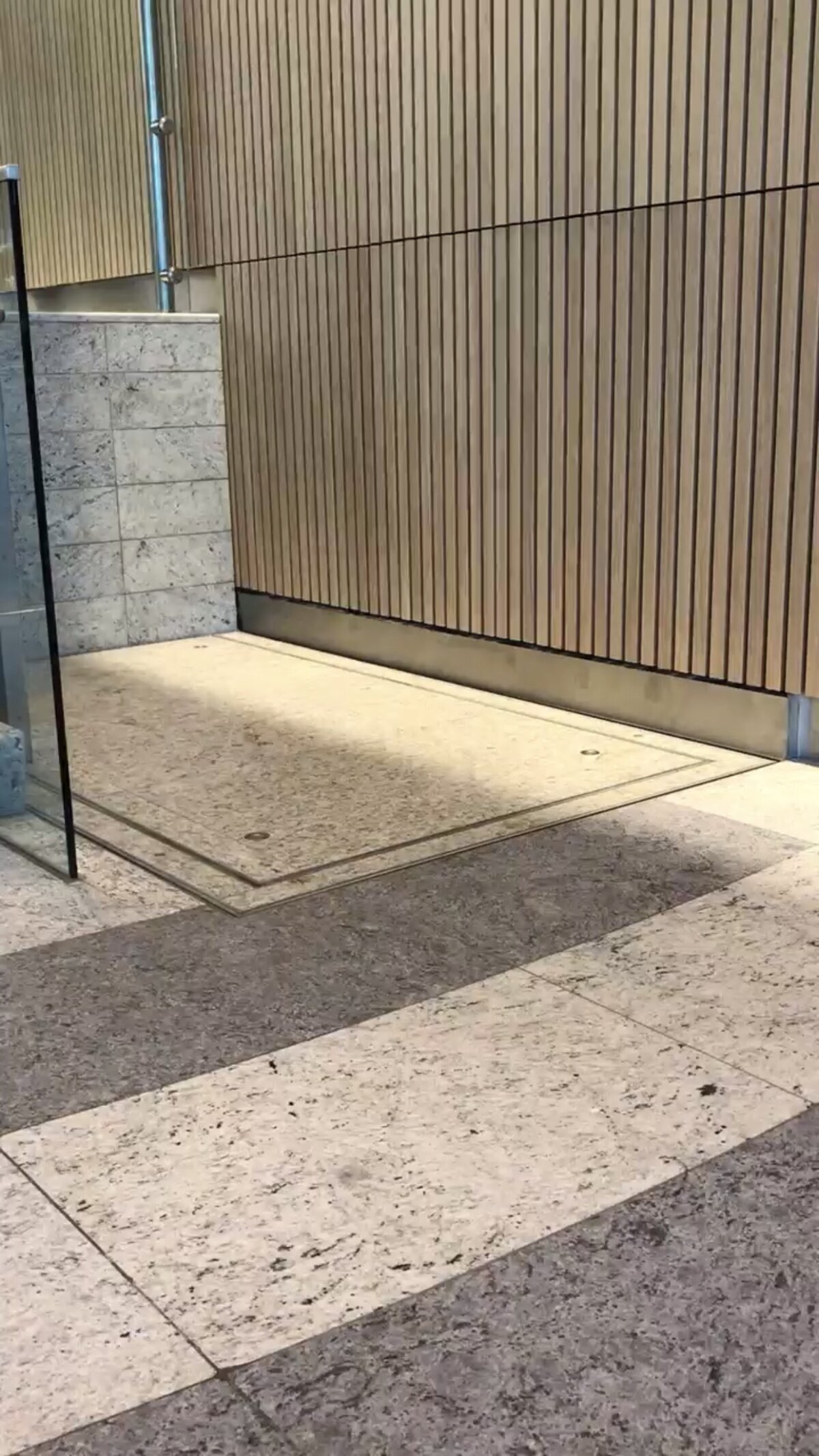
A 150mm pit can be technically possible, but functionally it becomes a failure point unless the pit includes:
-
a designed fall (not “flat and hope”), and
-
a debris management strategy (such as a local trench or relief zone), and
-
a clear drainage route.
This is the difference between a lift that works on day one and a lift that keeps faulting after the first winter.
For a deeper reference on pit falls, outlets, waterproofing sequencing, and common failure modes, see: Lift pit drainage best practices.
Problem–Solution: Drainage in a shallow external pit
Problem
External pits collect water. In shallow pits, standing water can cause long-term issues, and poor falls can lead to puddling in exactly the wrong places.
“Not only a drainage point, we’ve got to get a slope inside that pit to get that water draining.”
Solution
The design intent was to ensure:
-
waterproofing is combined with a positive fall,
-
the fall direction is coordinated with the steel beam layout,
-
drainage is positioned so it still works when finishes are installed,
-
any “relief trench” zones are kept clear of structural steel conflicts.
Steel Beam Coordination Checklist (for structural engineers)
-
Confirm lift point-load locations early (do not assume they are flexible).
-
Confirm beam spans and deflection limits under dynamic loading.
-
Confirm lightwell positions and any “no-go” zones beneath.
-
Reserve a debris clearance / relief zone where needed.
-
Confirm pit falls and drainage route before beam directions are finalised.
-
Confirm interface zones for gate frames, upstands, and stability fixings.
-
Confirm sequencing with tenant fit-out below to avoid ceiling and services clashes.
Gate and barrier selection: staff-led vs independent access
When a retracting stair lift creates a void at the upper landing, protection is mandatory. The correct option depends on how the building intends to operate the lift.
Decision matrix
If the lift is concierge or staff-operated:
-
a removable barrier can deliver the cleanest aesthetics, with controlled use and secure storage.
If independent access is required (keys issued, 24/7 use):
-
an automated gate is typically more appropriate, even if it is more visible.
“Which comes back to whether a staff member is going to control this or not.”
Relevant product context for retracting stair configurations: Thames Retracting Stair Lift.
Common misconceptions we see on terrace lift enquiries
Misconception 1: Any steel can take platform lift point loads
Steel can only be assumed adequate after deflection and load-path analysis. Long spans, flexible decks, or secondary steel can create a moving base that a precision lift cannot tolerate.
Misconception 2: Shallow pit drainage is optional if the terrace is “covered”
Even under canopies, wind-driven rain and cleaning regimes lead to water ingress. The pit needs a fall and an exit route.
Misconception 3: Finish build-up is a cosmetic choice
Finishes directly reduce usable pit depth and tolerance. Adhesives, tiles, and build-ups must be treated as part of the lift interface.
When steel beams are the right choice
This approach is typically appropriate when:
-
slab penetration is prohibited by structure or waterproofing,
-
the design can coordinate steel beams to known point-load pads,
-
the pit can still achieve falls and drainage,
-
the project team can freeze interfaces early.
When this approach isn’t viable
Steel beam support may be the wrong route when:
-
beam spans or deck build-ups lead to excessive deflection,
-
there is insufficient depth to achieve drainage falls and finishes without compromising tolerance,
-
the cost and risk of structural coordination outweigh controlled slab modification,
-
maintenance access below is blocked by tenant fit-out or services that cannot be relocated.
Programme risk and higher-risk building approvals
Some projects sit inside the higher-risk building regime in England, which can affect approvals, sequencing, and client commitment timing. The GOV.UK guidance explains that higher-risk building work needs building control approval from the Building Safety Regulator before work starts, and it sets out who applies, when approval is required, and how decisions are made.
Reference: https://www.gov.uk/guidance/building-control-approval-for-higher-risk-buildings
In practical terms, this can create two possible programmes, and it influences whether a client places an order early or waits for regulatory certainty.
Two-track programme strategy (to avoid fit-out clashes)
Where fit-out is happening below the lightwells while terrace works progress above, the safest strategy is to run two tracks in parallel:
-
Track A: confirm lift concept, gate model, and steel beam zones early enough to protect the fit-out below.
-
Track B: progress the detailed design and site-specific drawings once programme classification and approvals are clearer.
Product Integration Summary
If your terrace lift needs a compact solution with controlled operation, the lift type and gate strategy often align with one of these:
-
Regent Wheelchair Platform Stairlift for retracting stair / terrace applications
-
Windsor Lift where bespoke platform lift engineering is needed in constrained environments
-
Bespoke Lift where the building structure drives a site-specific design outcome
Frequently Asked Questions
Can a platform lift be fixed to steel beams instead of a concrete pit?
Yes, provided the steel beam layout is coordinated to the lift’s point load pads and checked for deflection.
Why does shallow pit drainage matter on external terraces?
Because water ingress happens in real buildings, and shallow pits cannot tolerate standing water without long-term reliability risks.
Do I need a gate if the rise is over 500mm?
Yes, the void must be protected, and the correct solution depends on whether operation is staff-led or independent.
What is the best barrier option for a concierge-managed building when the budget is tight?
A removable barrier can be the cleanest visual option if staff can deploy and store it reliably.
How early do steel beams need to be confirmed?
Early enough to avoid clashes with tenant fit-out, services, and ceiling works beneath the lift zone.
Can finishes reduce my usable pit depth?
Yes, adhesives and surface finishes reduce tolerance and must be included in the pit depth calculation.
What happens if the building falls into the higher-risk regime?
It can change approvals and programme sequencing, and clients may delay procurement until the building control route is confirmed.
Call to action
If you are designing an external terrace lift and cannot cut the slab, we can review your drawings and help you lock down: steel beam zones, pit falls and drainage, and the gate strategy.
Book a Teams Meeting with one of our Project Managers: https://www.sesameaccess.com/book-a-meeting