
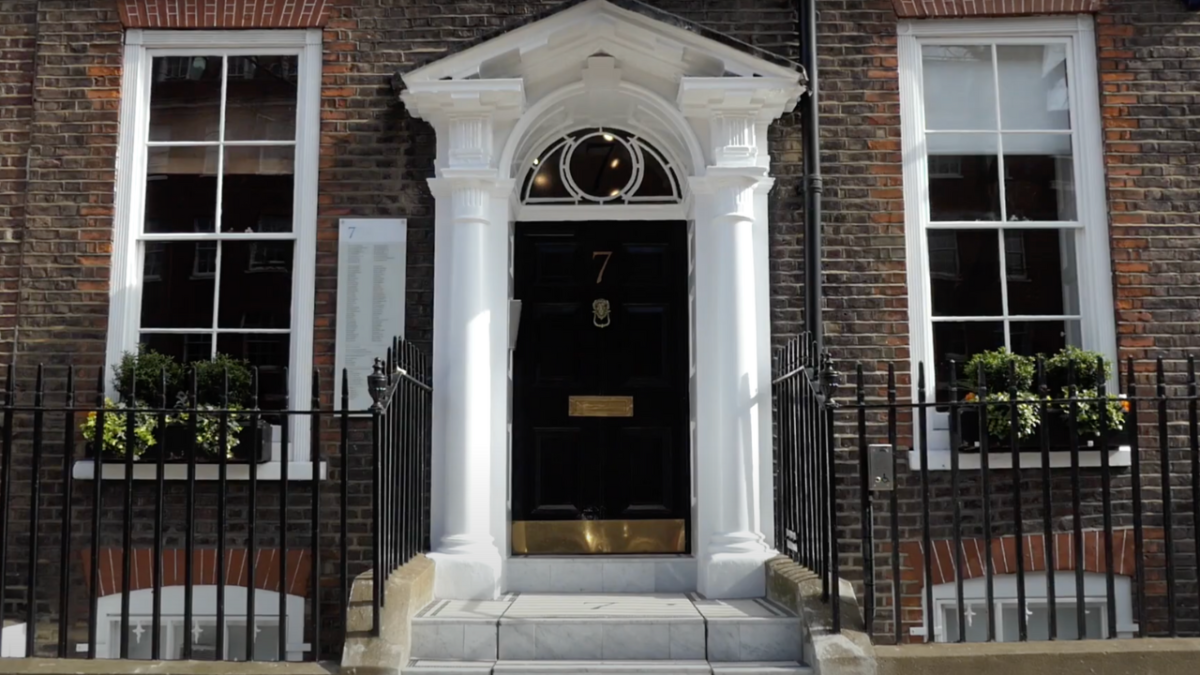
UKPN Rooms Beneath Pavements: Managing Lift Pit Risk in Historic London Buildings
Key Takeaways
-
Many listed London buildings conceal UK Power Networks rooms and former coal cellars beneath pavements.
-
Lift pits can intersect these spaces, but permissions and response times often dictate programme viability.
-
Early underground awareness and parallel option modelling reduce two-month delays.
-
Sesame Access focuses on decision clarity, not single-track design assumptions.
Introduction
In historic London streetscapes, accessibility projects frequently collide with infrastructure that predates modern building records. Pavement-level entrances often sit above legacy coal vaults or active electrical rooms serving one or multiple buildings.
When a lift pit is proposed in these locations, the challenge is rarely engineering alone. Ownership uncertainty, statutory permissions, and response times can reshape the entire access strategy.
Sesame Access approaches these conditions through early feasibility consultation, detailed site measurement, and parallel option modelling, allowing clients to understand risk before committing to a path that may stall later.
Why Most Access Consultants Miss This
Standard accessibility audits typically focus on surface geometry, Part M compliance, and visual impact. Underground constraints are often left until tender or construction stage, where programme pressure is highest.
Sesame’s heritage lift engineering experience has shown that UKPN conflicts are best identified at feasibility stage. Across dozens of pavement-level entrances in historic London contexts, underground rooms have repeatedly dictated whether a preferred solution is viable or whether an alternative must be pursued early.
This is why Sesame architects the decision process itself, not just the lift.
Why UKPN Rooms Exist Beneath Pavements
Many Georgian and Victorian buildings were adapted repeatedly over centuries. Coal delivery vaults were constructed beneath pavements and later repurposed to house electrical infrastructure.
UKPN rooms may:
-
Serve a single building or multiple neighbouring properties
-
Extend deeper than expected below pavement level
-
Be locked, restricted, or undocumented
For reference, UK Power Networks outline their responsibilities and infrastructure role at https://www.ukpowernetworks.co.uk/.
The Core Conflict: Lift Pits vs Underground Infrastructure
Pavement-level lift pits introduce specific risks when underground rooms are present:
-
Structural intrusion into active electrical infrastructure
-
Separate statutory processes outside planning and building control
-
Long response windows before permissions are confirmed
As noted during early feasibility discussions, “which may or may not be accessible and able to use, but what it does do is add so much time.”
The 90-Day UKPN Reality Check
Typical UKPN engagement follows a predictable sequence:
-
Initial contact and ownership clarification, often 2–3 weeks
-
Submission of site-specific drawings, usually client-led
-
Technical review period of approximately 4–8 weeks
-
Formal written consent or constraints letter taking a further 2–4 weeks
Sesame models alternative solutions during this window rather than waiting for refusal.
When to Pursue UKPN Permission vs When to Pivot
| Decision Trigger | Pursue UKPN Route | Pivot to Alternative Entrance |
|---|---|---|
| Listing status | Grade II | Grade I or II* |
| Programme flexibility | 2 months or more | No time delay |
| UKPN scope | Single-building supply | Shared multi-building infrastructure |
| Long-term value | Below-ground maintenance access critical | Speed and certainty prioritised |
Cost–Time–Risk Trade-Off Matrix
| Route | Cost Impact | Programme Risk | Maintenance Access |
|---|---|---|---|
| UKPN-dependent pit | Significant | 2 month delay risk | Often constrained |
| Alternative entrance | None | no uncertainty | Full access from below |
Field Insight: The Site Meeting Reality
On site, feasibility decisions are grounded in measured reality rather than assumptions. Distances are taken from the bottom step to pavement edge to confirm 1500mm turning circles. Turning space is sometimes partially achieved using the platform itself once deployed.
As described during consultation, “I’ve measured up the space from the bottom step right down to the pavement, so we will be looking at those turning circles as well.”
The Maintenance Myth
Pavement-level lifts are often treated as surface-only installations. In practice, the most serviceable systems prioritise full machinery access from below wherever possible.
Alternative entrances can allow long-term maintenance access that UKPN-constrained pits cannot, supporting 25-year service life expectations.
Problem–Solution: Managing Risk Without Losing Access
Problem
A preferred pavement-level lift location overlaps an underground UKPN room, introducing permission risk and delay.
Solution
Sesame develops parallel options early, allowing informed selection between:
-
A UKPN-dependent solution
-
A lower-risk alternative entrance strategy
As explained during feasibility discussions, “we’ll model up both and you’ll be able to present the pros and cons of both.”
Product Integration Summary
Different underground conditions require different systems.
| Condition | Recommended Sesame Solution | Reason |
|---|---|---|
| Shallow pit tolerance | Wellington Lift for listed buildings | Reduced excavation depth |
| No pit tolerance | Traversing Lift | Avoids underground works |
| Highly constrained geometry | Fully bespoke lift solution | Designed around site limits |
| Long-term service focus | Westminster Equality Act Lift | Supports controlled access and servicing |
For deeper design context, see Designing bespoke heritage staircase lift solutions and examples from Sesame Access global installations.
Common Misconceptions
UKPN rooms are not always building-specific. Many serve multiple properties.
Building Control approval does not imply UKPN consent. These are separate statutory processes.
Shallow pits do not guarantee avoidance. UKPN rooms frequently extend 2.5–3m below pavement level.
Frequently Asked Questions
Can lift pits be constructed into UKPN rooms?
Sometimes, subject to permission and technical constraints.
Who owns underground UKPN rooms?
Ownership varies and must be confirmed early.
Do UKPN constraints prevent accessibility upgrades?
No. They influence strategy, not outcome.
When should UKPN engagement start?
At feasibility stage, not post-planning.
Conclusion
UKPN rooms beneath pavements are a defining constraint of historic London accessibility projects. Early recognition, parallel option modelling, and honest programme advice are what separate predictable delivery from avoidable delay.
Next Step
Book a Teams meeting with one of our Project Managers to review underground constraints before committing to a design direction.
👉 https://www.sesameaccess.com/book-a-meeting