Key Takeaways
- Tight sites usually need parallel option development, not a single “standard” lift assumption.
- Below-slab restrictions and steelwork often dictate the mechanism choice more than platform size.
- Sesame typically develops a low-pit platform option, a premium alternative, and an architectural integration option so the client can choose with clarity.
- The best outcomes come when the access route, turning space, and door strategy are coordinated early, not retrofitted at tender stage.
- If you cannot cut slab or steel beams, you need a constraints-first approach and early structural coordination.
Problem: Why do tight sites break standard lift specifications?
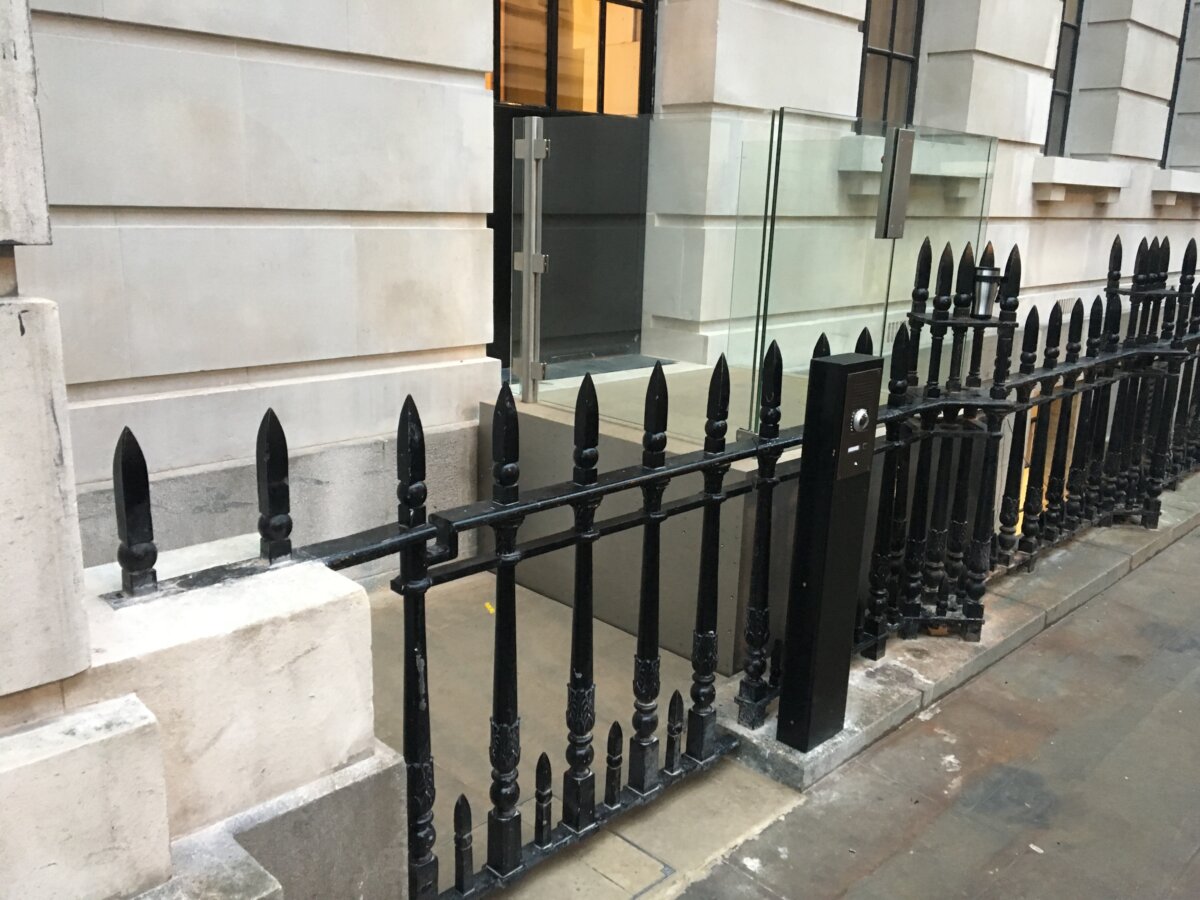
Many complex enquiries start with a simple brief and end up constrained by what is under the floor, not what is visible above it. In this enquiry, the design team needed a lift position where the slab and shallow structural zone were impacted by what existed below, so the goal was to keep the pit as shallow as possible while still delivering an inclusive, user-friendly outcome.
If you are dealing with steelwork or a slab you cannot cut, this companion guide explains the typical structural issues and the coordination points that prevent redesign later in the programme:
Sesame’s proprietary decision method: The Three-Stage Engineering Process
This is the method Sesame uses to turn complicated site constraints into buildable lift options.
Stage 1: Constraints mapping
Pit depth available, slab build-up, beams, boundaries below, door swing conflicts, circulation routes, turning space, finishes, and the intended user journey are mapped first.
One of the key objectives in this enquiry was stated plainly:
“We want to maintain it as shallow as possible in this location.”
Stage 2: Parallel option development
Instead of forcing one product, Sesame develops multiple viable pathways in parallel so the team can compare buildability, user experience, cost, and programme impact.
In this enquiry, three routes were explored:
- A shallow-pit platform approach using The People’s Lift
- A premium platform option using the Jubilee Disabled Access Lift
- A staircase-integrated concept route inspired by Wellington Lift and the Kensington Stairlift
Stage 3: User experience alignment
The chosen solution is aligned to how people actually use the entrance, not just whether the mechanism technically fits. That includes turning circles, fall-hazard management, door automation, and avoiding awkward pinch points.
A user-centric operational detail discussed in the enquiry was the upper door approach:
“We want that door to only open when the lift reaches the upper landing level… and then it’ll automatically close again and lock.”
Lead Engineer’s Perspective: The real physics behind shallow pits
Shallow pits are not only a “depth” issue. They are a clearance and stability issue.
As pit depth reduces, you typically lose:
- mechanical clearance for wheel-stop and safety edge arrangements
- levelling tolerance for imperfect slabs
- robustness margin for stabilisation below the platform
That is why Sesame often proposes a solution that sits directly onto a properly levelled base using levelling compound, rather than adding extra frame build-up that consumes precious depth.
If the slab or steelwork cannot be altered, that structural reality becomes the governing constraint, and the lift mechanism must follow it, not the other way around.
Go/No-Go Constraints Matrix: If this, then that
Use this quick matrix to self-filter options before you even reach tender stage.
- If pit depth is around 300mm and you can coordinate finishes early, then a low-profile platform solution is usually viable.
- If pit depth is constrained and you also need a fully integrated guard/wheel-stop system, then expect a premium platform alternative.
- If visual impact is critical and entrance architecture must remain dominant, then a staircase-integrated approach can be worth the added design effort.
- If you cannot cut slab or beams, then you must prioritise constraints mapping and structural coordination first, then choose the mechanism second.
When each solution works and doesn’t work
This table is designed to help architects and project teams eliminate the wrong option early, which reduces redesign and increases programme certainty.
|
Option |
Pit depth available |
Budget bracket |
Installation timeline impact |
Best for |
Wrong for |
|
Low-profile platform lift using The People’s Lift |
Around 300mm typical target in this enquiry |
Lower cost relative to premium wheel-stop systems |
Usually simplest coordination path |
Tight footprints, shallow pits, practical access upgrades |
Projects needing higher complexity barrier systems within the same depth constraints |
|
Premium platform lift using Jubilee Disabled Access Lift |
Shallow pit possible but footprint may increase |
Higher cost |
More coordination on mechanism layout |
When you want a more complex wheel-stop approach or specific guarding logic |
Sites where length cannot increase or where the premium mechanism creates knock-on space penalties |
|
Staircase-integrated concept using Wellington Lift or Kensington Stairlift |
Depends on arrangement and structural allowances |
Typically higher |
Often adds design coordination effort |
When aesthetics, entrance experience, and architectural integration drive the brief |
Sites where circulation cannot tolerate temporary void exposure during step movement or where space to reorganise steps is unavailable |
|
Fully bespoke development using Bespoke Lift or Traversing Lift |
Variable |
Variable |
Depends on scope |
Unusual boundaries, complex geometry, non-standard workflows |
Projects that require a fast off-the-shelf answer without design development |
Why this is usually misunderstood
Two common misunderstandings cause delays and redesign:
- Platform size is confused with pit requirement. A 1400mm long platform does not automatically imply deep pit needs. The mechanism type and safety system arrangement governs the pit strategy.
- Door and turning space are treated as separate from the lift. In reality, the user experience is the combined system of approach route, turning, call controls, door behaviour, and safe edges.
This enquiry showed the benefit of thinking system-first, not product-first, because the team discussed turning circle behaviour and door automation alongside pit geometry and lift footprint.
Common specification mistakes that experienced teams avoid
- Specifying a platform size without confirming pit build-up, finishes, and levelling tolerance, then discovering late that the usable depth is less than assumed.
- Treating steel beams as an inconvenience rather than a governing constraint, then finding out the slab cannot be modified at all.
- Placing the upper door too tight to the lift path, then having to redesign the actuator and clearances later.
- Designing the lift “box” but not the full user journey, then losing the turning circle to door swings, handrails, or circulation pinch points.
If you want a practical way to reduce these risks before drawings are “too far gone,” this page shows how Sesame prepares for client meetings to capture constraints early and turn them into actionable design outputs:
Product Integration Summary
These are the Sesame products referenced as viable solution pathways during the enquiry, with context-driven link text for clarity:
- Low-profile platform lift pathway using The People’s Lift: compact platform solution for shallow pits
- Premium platform alternative using Jubilee Disabled Access Lift: platform lift option with enhanced wheel-stop approach
- Staircase-integrated concept pathway using Wellington Lift: staircase-integrated access lift concept
- Alternative staircase route using Kensington Stairlift: integrated staircase lift solution pathway
- When constraints demand full tailoring, consider Bespoke Lift: site-specific accessibility lift engineering or Traversing Lift: engineered for complex movement constraints
A flexibility statement from the enquiry that reflects Sesame’s approach:
“Whatever the width you want it to be, we will make. It’s not a problem.”
Frequently Asked Questions
What is the best platform lift option when pit depth is limited?
A low-profile platform solution is often the starting point when the pit depth must remain shallow, but the mechanism choice depends on clearance, tolerance, and safety system requirements.
Platform lift vs staircase lift for tight entrances: which is better?
A platform lift is often simpler and more cost-effective when the pit strategy is viable. A staircase-integrated approach can reduce visual impact and improve architectural integration when space and programme allow for more design coordination.
How much does shallow pit restriction add to cost?
Shallow pit solutions can increase engineering effort and coordination, particularly when finishes, levelling tolerance, and safety edges must be tightly controlled. The cost impact depends on mechanism choice and the amount of bespoke detailing required.
Can you deliver compliant access without cutting steel beams or slab?
Yes, but the constraints must be mapped early so the lift mechanism, tolerances, and installation method are selected around what cannot move. This is exactly why early structural coordination matters.
What dimensions do I need for a compliant wheelchair platform?
The platform usable area and clear access route must be coordinated with the approach, turning, and door strategy. The “right” dimensions depend on site constraints and user flow, not just a generic rule-of-thumb.
Do I need an automatic door at the upper landing?
If independent access is a priority for users who may struggle with manual doors, an automated and interlocked door strategy is often the most user-friendly approach.
What should I prepare before speaking to Sesame about a tight site?
Have a basic constraints pack ready: pit depth target, slab build-up, known beams, any “no cut” zones, turning space, door locations, and intended finishes. If you are unsure, use Sesame’s meeting prep approach as a checklist:
How Sesame prepares for client meetings
Conclusion
Tight sites are not solved by picking a product first. They are solved by mapping constraints, developing options in parallel, and selecting the solution that protects users, programme, and buildability.
If you have a constrained access enquiry and want a clear options comparison with real engineering trade-offs, book a Teams Meeting with one of our Project Managers:
https://www.sesameaccess.com/b...